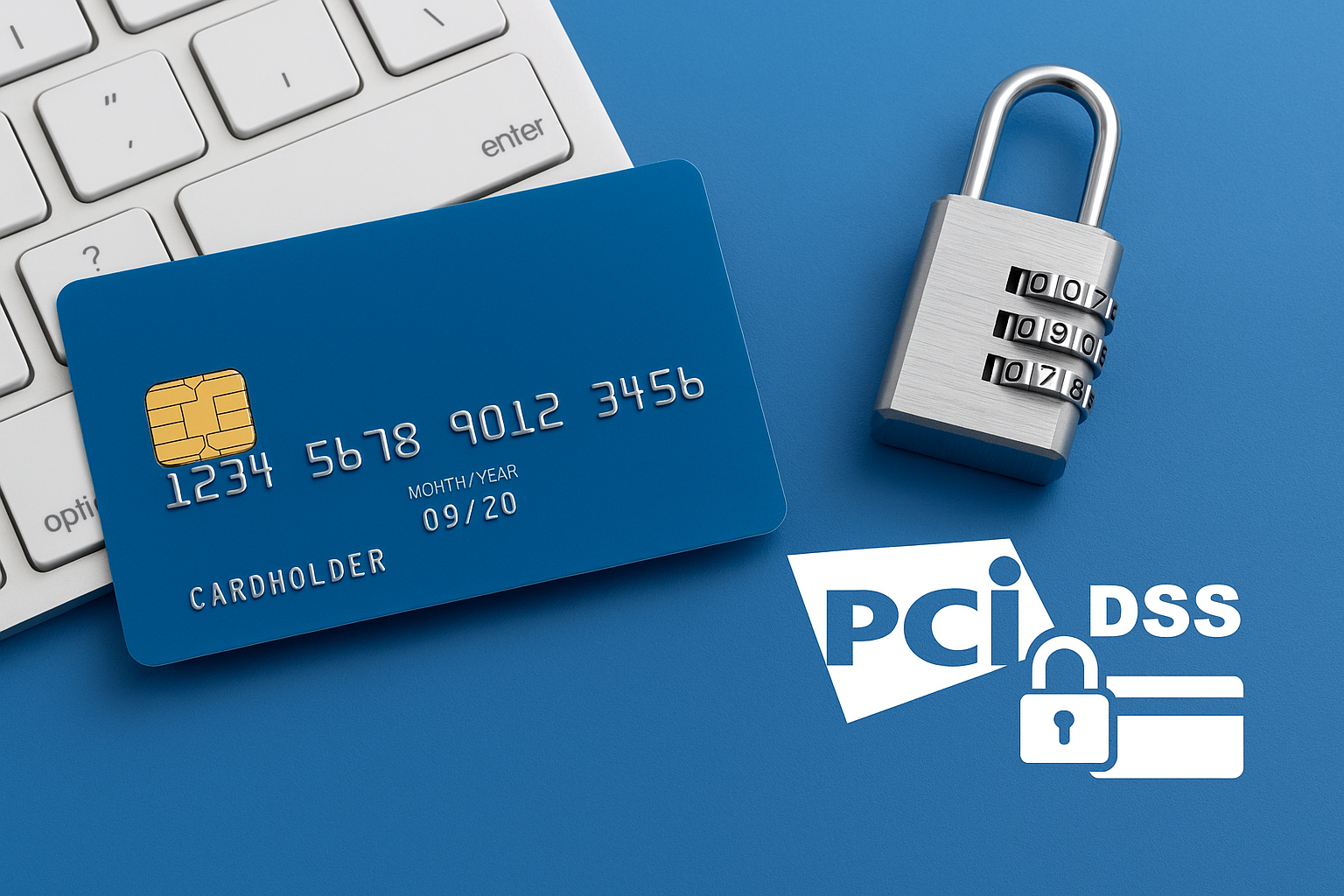
Protecting cardholder data is one of the most important responsibilities for any business that accepts, processes, stores, or transmits payment cards. The Payment Card Industry Data Security Standard, better known as PCI DSS, sets the baseline for securing card data and reducing the risk of fraud and data breaches. Whether you run an eCommerce store, a SaaS platform, or a physical retail location, understanding PCI DSS requirements is essential for maintaining trust and meeting industry expectations.
What Is PCI DSS?
PCI DSS is a global security standard created by the major payment card brands to help organizations protect cardholder information. It applies to any business that handles credit or debit card data, regardless of size or transaction volume. The standard is designed to reduce security weaknesses by requiring a combination of policies, processes, and technical safeguards.
At a high level, PCI DSS focuses on three goals: protecting cardholder data, strengthening systems and networks, and maintaining a secure environment over time. Compliance is not a one-time project; it is an ongoing effort that involves regular testing, monitoring, and improvement.
Why PCI DSS Requirements Matter
Card data is a valuable target for cybercriminals. A single weakness in your environment can lead to stolen payment information, financial losses, reputational damage, and legal consequences. PCI DSS requirements help organizations reduce these risks by standardizing security controls across the payment ecosystem.
Compliance can also improve business operations. Stronger access controls, better network segmentation, and consistent monitoring often lead to fewer incidents and more reliable systems. For many organizations, PCI DSS compliance is also necessary to maintain relationships with payment processors, banks, and customers.
The 12 PCI DSS Requirements
PCI DSS is built around 12 core requirements, grouped into six broader control objectives. These requirements apply to all organizations in scope, though the exact validation process may vary based on business size and how payment data is handled.
1. Install and Maintain Network Security Controls
Firewalls and similar network security controls help protect cardholder data from unauthorized access. Businesses must configure these controls carefully and review them regularly to ensure only necessary traffic is allowed.
2. Apply Secure Configurations
Default system settings are often insecure and widely known. PCI DSS requires organizations to change vendor defaults, harden systems, and maintain secure configurations for servers, devices, and applications.
3. Protect Stored Cardholder Data
If cardholder data must be stored, it should be protected with strong safeguards such as encryption, masking, truncation, and strict retention policies. The best approach is to avoid storing sensitive data unless there is a clear business need.
4. Protect Cardholder Data During Transmission
Whenever cardholder data is transmitted across open or public networks, it must be encrypted using strong cryptographic methods. This requirement is critical for protecting online checkout flows, remote access connections, and data transfers between systems.
5. Protect Systems and Networks from Malware
Organizations must deploy and maintain anti-malware protections on systems commonly affected by malicious software. This includes keeping protection tools up to date and monitoring for suspicious activity.
6. Develop and Maintain Secure Systems and Software
Secure development and patch management are central to PCI DSS. Businesses need to identify vulnerabilities, apply updates promptly, and follow secure coding practices when building or modifying software that handles payment data.
7. Restrict Access by Business Need to Know
Access should be limited to people and systems that genuinely need it. This principle of least privilege helps reduce the chance of unauthorized viewing, theft, or misuse of cardholder data.
8. Identify Users and Authenticate Access
Each user must have a unique identity, and access should be controlled through strong authentication. Multi-factor authentication is required in many cases, especially for administrative and remote access.
9. Restrict Physical Access to Cardholder Data
Physical security matters just as much as digital security. Organizations must protect paper records, devices, and server rooms to prevent unauthorized access, theft, or tampering.
10. Log and Monitor Access
Logging is essential for detecting suspicious activity and investigating incidents. PCI DSS requires organizations to record key events, review logs regularly, and maintain visibility into system and user actions.
11. Test Security Regularly
Regular testing helps identify weaknesses before attackers do. This includes vulnerability scanning, penetration testing, and other assessments designed to verify that security controls are working as intended.
12. Support Security with Policies and Procedures
Security is not just technical; it also depends on governance. Organizations must maintain documented policies, assign responsibilities, and train employees so security practices are followed consistently.
PCI DSS Compliance Levels
PCI DSS compliance is typically validated through different levels based on transaction volume. Larger merchants usually face more rigorous assessment requirements, while smaller businesses may complete a self-assessment questionnaire. Even if your company is small, you still need to meet the relevant PCI DSS requirements and may need to provide proof of compliance to your acquirer or payment processor.
It is important to note that compliance validation can change depending on how payment data is handled. For example, a business using a third-party payment gateway may have a smaller scope than one that stores cardholder information directly on its own servers.
Common Challenges in Meeting PCI DSS Requirements
Many organizations struggle with scope reduction, documentation, and ongoing maintenance. One of the most common mistakes is assuming that compliance is achieved once a checklist is completed. In reality, PCI DSS requires continuous oversight.
Another challenge is data sprawl. Cardholder information may exist in multiple systems, backups, logs, or spreadsheets, increasing risk and complicating compliance efforts. Poor asset inventory, outdated software, and weak access management can also make it harder to stay compliant.
To address these issues, businesses should map where cardholder data flows, remove unnecessary data, and implement controls that simplify security operations. Working with qualified security professionals can also help organizations interpret requirements correctly and prioritize remediation efforts.
Best Practices for Staying PCI DSS Compliant
Successful compliance depends on building security into everyday operations. Start by minimizing the amount of cardholder data you store and process. If possible, use tokenization or a third-party hosted payment solution to reduce scope.
Next, keep systems patched, use strong encryption, and enforce multi-factor authentication for sensitive access. Review permissions regularly to ensure employees only have access to what they need. Log important activity and monitor alerts so potential issues are caught early.
Finally, make compliance part of your routine. Conduct regular reviews, test security controls, update policies, and train employees on their responsibilities. A mature security program will make PCI DSS compliance far easier to maintain.
Conclusion
PCI DSS requirements provide a clear framework for protecting payment card data and reducing cyber risk. While the standard may seem complex, its core purpose is straightforward: keep cardholder information secure through strong technical controls, sound business practices, and continuous oversight. By understanding the requirements and building them into daily operations, businesses can support safer payments and greater customer trust.