What Is Interchange Plus Pricing?
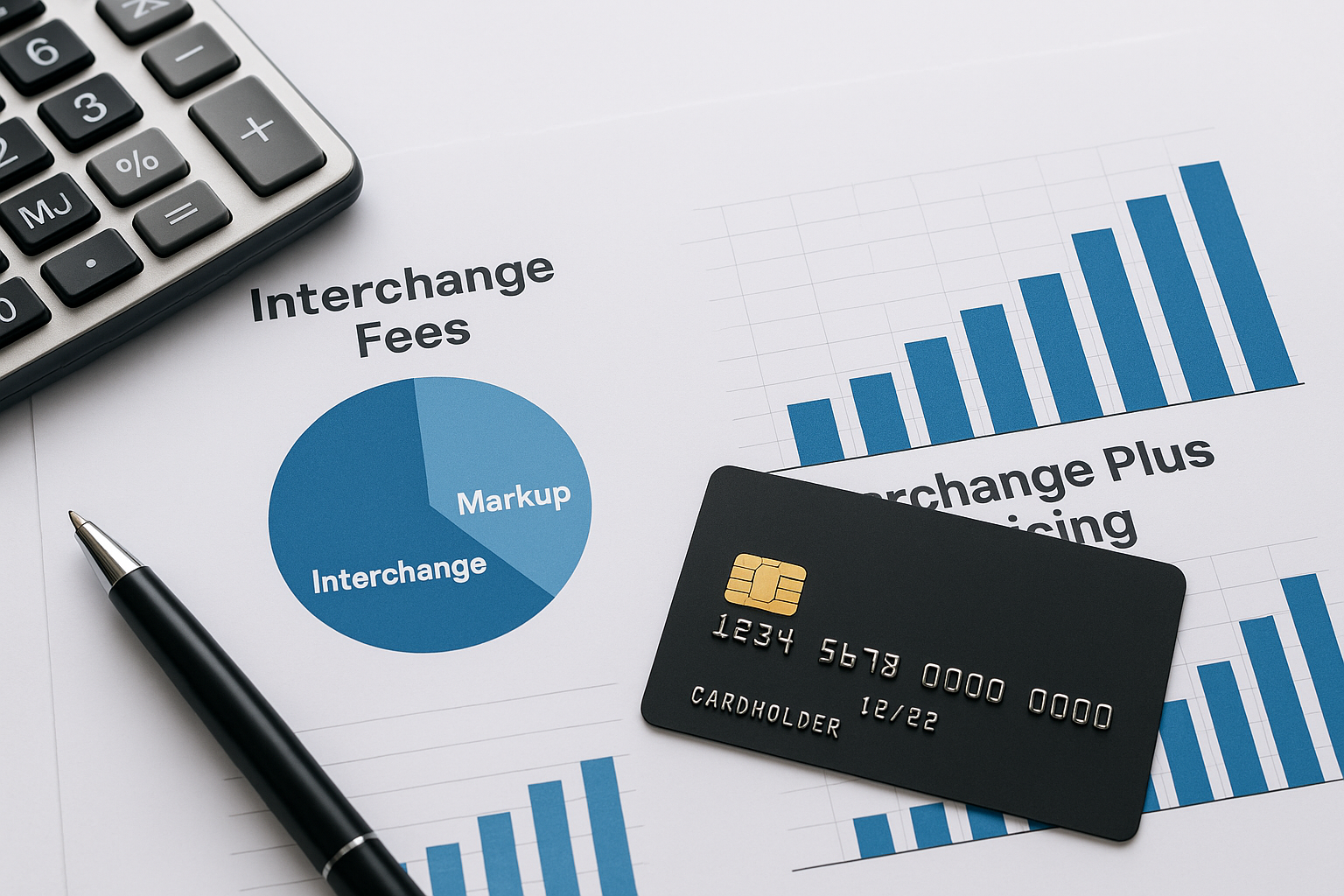
Interchange plus pricing is a credit card processing fee model that separates the actual card network costs from the processor’s markup. Instead of charging one blended rate for every transaction, the processor passes along the “interchange” fee set by the card networks and adds a clearly defined service charge on top. This structure makes pricing more transparent and often more cost-effective for businesses that process a meaningful volume of card payments.
To understand why this matters, it helps to know that every card transaction involves multiple parties: the cardholder’s bank, the merchant’s bank, the card network, and the payment processor. Each of these players may take a small cut. With interchange plus pricing, the underlying costs are itemized so merchants can see exactly what they are paying for and why.
How Interchange Plus Pricing Works
When a customer pays with a card, the merchant is charged a fee for processing that transaction. Under interchange plus pricing, that fee is made up of two parts:
- Interchange fee: The base cost paid to the card-issuing bank and set by the card networks.
- Processor markup: The payment processor’s fee for providing the service, often charged as a fixed amount, a percentage, or both.
For example, a processor might charge interchange + 0.30% + $0.10. If the interchange fee for a particular transaction is 1.80%, the merchant would pay 2.10% plus $0.10 in total processing fees. Because interchange rates vary based on card type, transaction method, and risk level, the final cost can differ from one payment to the next.
This model is especially common in merchant services and is often considered one of the most transparent pricing structures available. Rather than hiding costs in a single flat rate, interchange plus shows how the total is built.
What Is Interchange?
Interchange is the fee paid to the card-issuing bank when a card transaction is processed. It is not set by the processor or the merchant; instead, it is established by the card networks such as Visa and Mastercard. These fees help cover fraud risk, payment guarantee costs, and the operational expenses tied to the card payment system.
Interchange rates are influenced by several factors, including:
- Card type, such as debit, credit, rewards, or corporate cards
- How the card is used, such as in-person or online
- Whether the transaction is keyed in, swiped, dipped, or tapped
- Business category and processing environment
- Risk factors, including whether customer verification is present
Because of these variables, interchange is not one universal rate. It changes from transaction to transaction, which is one reason this pricing model is more complex than flat-rate pricing.
Why Businesses Choose Interchange Plus Pricing
Many businesses prefer interchange plus pricing because it offers more transparency and often better value over time. Here are some of the biggest advantages:
1. Greater Transparency
You can see the actual interchange cost and the processor’s markup separately. This makes it easier to understand your statement and compare providers.
2. Potential Cost Savings
For businesses with higher ticket sizes or more consistent processing volume, interchange plus pricing can be cheaper than flat-rate pricing. Since you only pay the true interchange cost plus a known markup, you may avoid overpaying on transactions that would otherwise be bundled into a higher flat fee.
3. Easier Provider Comparisons
Because the markup is clearly stated, it is easier to compare processors. You can evaluate whether a provider is offering competitive rates instead of trying to decode a bundled pricing structure.
4. Scales Well for Growing Businesses
As transaction volume rises, interchange plus pricing can remain competitive. Businesses that process a lot of cards often find that small differences in markup make a noticeable impact on monthly costs.
Potential Drawbacks to Consider
Interchange plus pricing is not perfect for every business. While it is often more transparent, it can also be harder to predict than a flat-rate model because the interchange portion changes based on the card and transaction type.
Here are a few possible downsides:
- More complicated statements: Monthly billing may include many line items and can feel overwhelming at first.
- Variable transaction costs: Since interchange rates fluctuate, your effective rate may change from one sale to another.
- Potential additional fees: Some providers still charge monthly account fees, PCI compliance fees, or gateway fees on top of the markup.
That is why it is important to ask for a full fee breakdown before signing a contract. A low markup does not always mean the lowest total cost if other charges are buried elsewhere.
Interchange Plus vs Flat-Rate Pricing
Flat-rate pricing is simpler: the processor charges the same percentage for most transactions, regardless of the actual interchange cost. This is easy to understand and can be appealing for very small businesses or occasional sellers. However, the simplicity can come at a price.
With flat-rate pricing, the processor absorbs the risk of interchange fluctuations, so they build that risk into the rate. As a result, businesses may pay more than they would under interchange plus pricing, especially if they process debit cards, PIN-based transactions, or lower-risk card types that qualify for lower interchange fees.
Interchange plus pricing, on the other hand, usually offers more accuracy and fairness. You pay the actual underlying cost plus a small markup. If your business values transparency and you want the chance to reduce processing expenses, interchange plus is often the stronger option.
Who Benefits Most from Interchange Plus Pricing?
This pricing model is especially attractive to:
- Retailers with steady card volume
- Restaurants and service businesses with many daily transactions
- Ecommerce businesses processing online payments
- Growing businesses looking for long-term savings
- Merchants that want clear and predictable markup pricing
Very small businesses or seasonal sellers may still prefer flat-rate pricing for simplicity. But once transaction volume increases, interchange plus pricing often becomes more appealing because even a small markup difference can add up over time.
How to Evaluate an Interchange Plus Offer
When comparing providers, do not focus only on the advertised markup. A good offer should include the full picture. Ask these questions:
- What is the exact markup over interchange?
- Are there monthly minimums or account fees?
- Is there a PCI compliance fee or annual fee?
- Are gateway, statement, or batch fees included?
- Are there volume discounts as sales grow?
- How often are rates reviewed or changed?
You should also request a sample statement. A reputable processor should be able to explain the fee structure in plain language and show how the charges would look in practice. If a provider is vague about pricing, that can be a red flag.
Conclusion
Interchange plus pricing is a transparent payment processing model that separates actual card network costs from the processor’s markup. It can help businesses understand their fees, compare providers more easily, and potentially save money as transaction volume grows. While it is a bit more complex than flat-rate pricing, the clarity and cost advantages make it a popular choice for many merchants.
If you want a pricing model that is easier to audit and often better for long-term growth, interchange plus pricing is worth a close look.