
What Are Credit Card Transaction Fees?
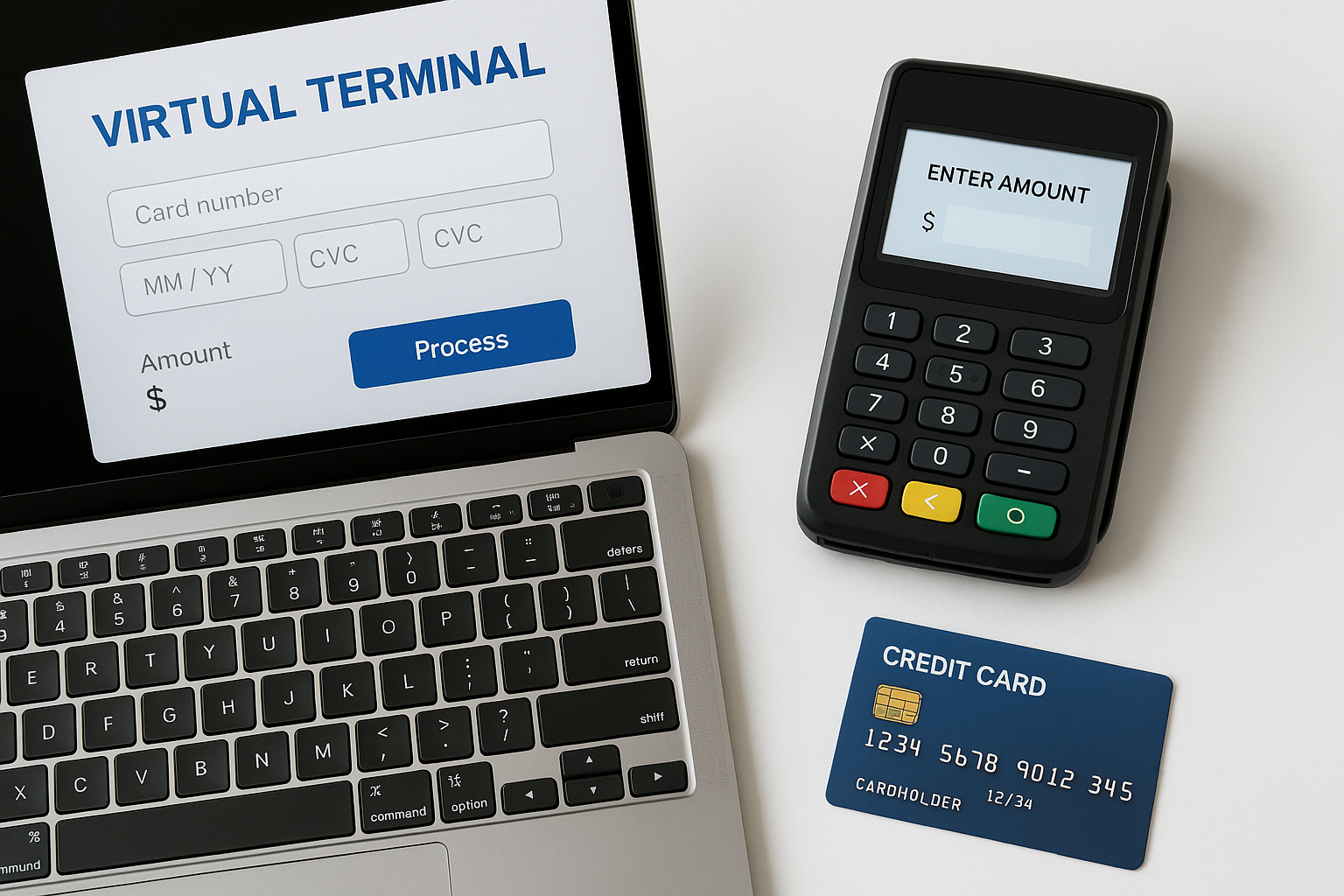
Credit card transaction fees are the costs a business pays each time a customer uses a credit card to make a purchase. These fees are charged by the companies that help move money from the customer’s bank to the merchant’s bank, along with the card networks and payment processors involved in the transaction.
For many businesses, these fees are a normal part of accepting card payments. But because they can add up quickly, understanding how they work is essential for protecting profit margins and making smarter payment decisions.
How Credit Card Transaction Fees Work
When a customer pays with a credit card, several parties may take a small portion of the transaction. The exact structure depends on the processor and pricing model, but the total fee usually includes three main components:
- Interchange fees — Paid to the cardholder’s bank.
- Assessment fees — Paid to the card network, such as Visa or Mastercard.
- Processor markup — Charged by the payment processor or merchant service provider.
These fees may be charged as a percentage of the sale, a fixed amount per transaction, or both. For example, a processor might charge 2.9% + $0.30 for every card payment. On a $50 sale, that would mean $1.75 in fees.
Interchange Fees
Interchange fees are usually the largest part of the total cost. They are set by the card networks but paid to the issuing bank. The rate can vary based on card type, transaction method, industry, and risk level. Rewards cards and business cards often have higher interchange costs than basic consumer cards.
Assessment Fees
Assessment fees are typically smaller than interchange fees, but they still contribute to the total. These fees help support the card networks that make electronic payments possible. They are usually charged as a tiny percentage of the transaction amount.
Processor Markup
The processor markup is the portion your payment provider keeps as revenue. This may be a flat monthly fee, a percentage of each transaction, or a combination of both. Some providers offer transparent pricing, while others bundle costs into a single rate.
Common Types of Credit Card Transaction Fee Pricing
Not all processors charge fees in the same way. Understanding pricing models can help you compare offers and avoid overpaying.
Flat-Rate Pricing
With flat-rate pricing, you pay one simple rate for most card transactions. This is easy to understand and common for small businesses. However, it can be more expensive for businesses that process a high volume of transactions or primarily accept lower-cost cards.
Interchange-Plus Pricing
Interchange-plus pricing separates the actual card network costs from the processor’s markup. This model is often more transparent and can be more cost-effective for growing businesses. It shows exactly how much goes to interchange and how much goes to the processor.
Tiered Pricing
Tiered pricing groups transactions into categories such as qualified, mid-qualified, and non-qualified. The problem is that it can be difficult to know which transactions fall into each tier, making costs less predictable. This model is often considered less transparent than interchange-plus pricing.
Other Fees Businesses Should Watch For
Credit card transaction fees are not always limited to the basic per-sale charge. Many payment providers also add extra fees that can increase your total cost of accepting cards.
- Monthly account fees — Charges for maintaining a merchant account or payment service.
- PCI compliance fees — Costs related to maintaining payment card security standards.
- Chargeback fees — Fees charged when a customer disputes a transaction.
- Gateway fees — Fees for using a payment gateway to authorize and route transactions.
- Statement or reporting fees — Charges for account statements or reporting tools.
These fees may seem small individually, but they can become significant over time, especially for businesses with many transactions each month.
What Affects Credit Card Transaction Fees?
The amount you pay in transaction fees depends on several factors. Knowing what drives costs can help you lower them.
- Card type — Premium, rewards, and business cards often cost more to process.
- Transaction method — Card-present payments usually cost less than keyed-in or online payments.
- Business type — Certain industries are considered higher risk and may face higher rates.
- Average transaction size — Small tickets can feel expensive because fixed per-transaction fees take up more of the sale.
- Chargeback risk — Businesses with higher dispute rates may pay more in fees or penalties.
For example, a restaurant that processes many small payments may feel the impact of per-transaction fees more than a furniture store with fewer, larger sales.
How Credit Card Transaction Fees Impact Business Profitability
Because fees are taken from revenue, they directly affect profit margins. A business with thin margins may need to carefully balance the convenience of card acceptance with the cost of processing.
For example, if a company has a 10% profit margin and pays 3% in credit card fees, nearly one-third of its profit from that sale can disappear before operating expenses are even considered. Over time, that can make a major difference.
That does not mean businesses should avoid card payments altogether. In many cases, accepting cards increases sales, improves customer satisfaction, and reduces the risk of handling cash. The key is understanding the cost structure and choosing a pricing model that fits your business.
How to Reduce Credit Card Transaction Fees
While you may not be able to eliminate transaction fees completely, you can take steps to lower them.
- Compare processors carefully — Look beyond headline rates and review all fees.
- Choose the right pricing model — Interchange-plus may save money for higher-volume businesses.
- Encourage card-present payments — Swiped, tapped, or inserted payments often cost less than manually entered ones.
- Reduce chargebacks — Clear policies, good customer service, and accurate billing help prevent disputes.
- Set minimum purchase amounts where allowed — This can help offset small-ticket processing costs.
- Review statements regularly — Make sure you understand every fee being charged.
Even small improvements can make a meaningful difference over the course of a year.
Should You Pass Fees on to Customers?
Some businesses choose to pass credit card fees on to customers through surcharges or cash discount programs. This can help offset costs, but it must be done carefully and in compliance with card network rules and local laws.
If you are considering this approach, make sure to understand disclosure requirements, state regulations, and customer expectations. In some industries, passing fees along may be accepted; in others, it may create friction at checkout. For many businesses, absorbing the fee and building it into pricing is simpler and more customer-friendly.
Conclusion
Credit card transaction fees are a necessary cost of doing business for most merchants, but they do not have to be a mystery. By understanding how fees are structured, what affects them, and which pricing model suits your business, you can make better payment decisions and protect your bottom line.
With the right provider and a close eye on costs, accepting credit cards can remain a profitable and convenient part of your payment strategy.