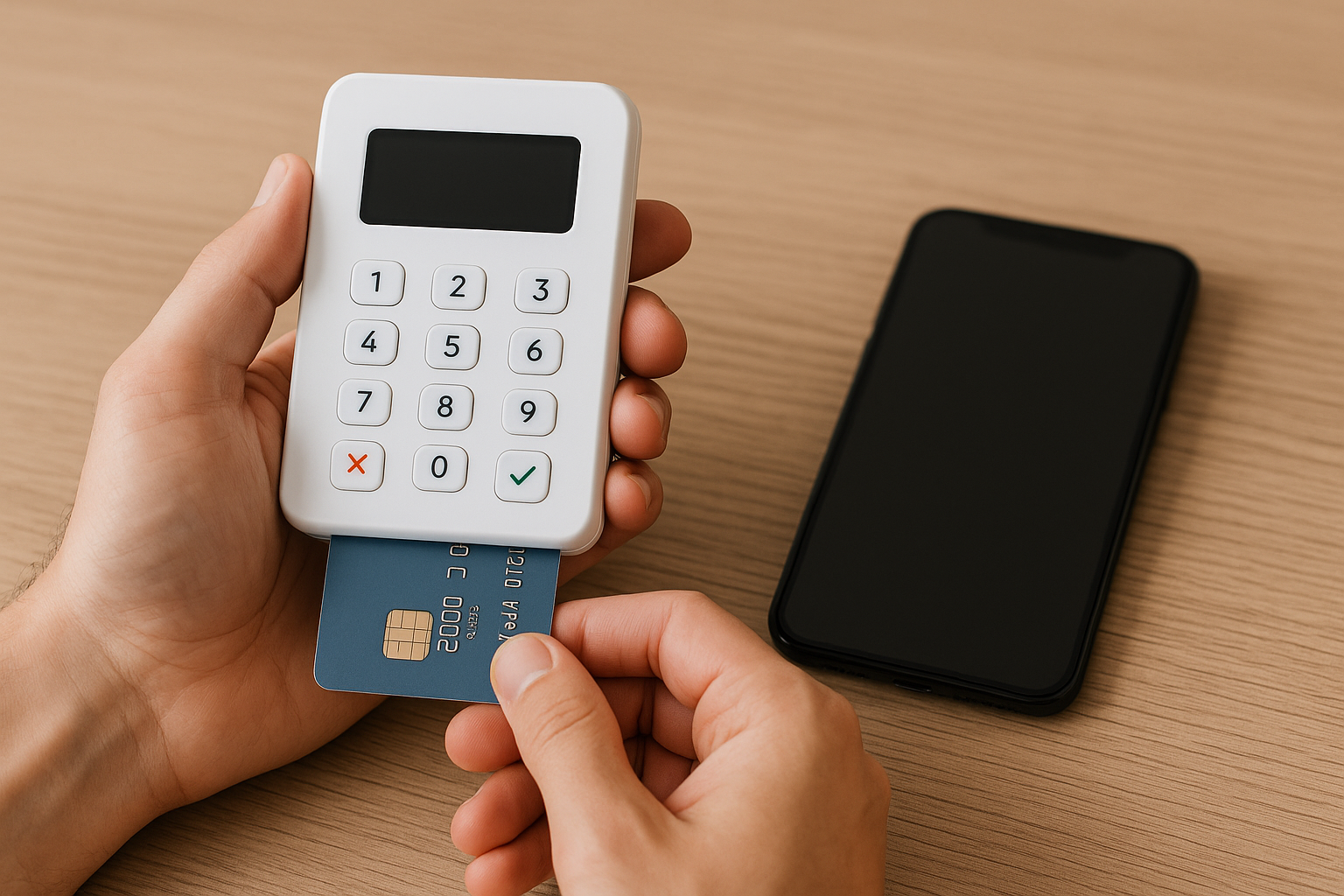
What Is Mobile Credit Card Processing?
Mobile credit card processing lets businesses accept card payments anywhere they have a smartphone, tablet, or mobile card reader. Instead of relying on a traditional countertop terminal, a merchant can take payments on the go using a mobile app and a connected device. This makes it possible to sell at pop-up shops, markets, job sites, trade shows, curbside locations, and even at a customer’s home.
At its core, mobile credit card processing works the same way as other card payments. The customer taps, inserts, or swipes a card, the payment data is encrypted, and the transaction is authorized through the payment network. The difference is that the hardware and software are designed for portability and flexibility. For many small and growing businesses, that convenience is a major advantage.
Mobile payment tools often include features such as digital receipts, inventory tracking, invoicing, and customer profiles. In other words, they do more than just move money; they help businesses run more efficiently.
How Mobile Credit Card Processing Works
The process is simple for both the business and the customer. First, the merchant opens a payment app on a phone or tablet and enters the sale amount. Then the customer completes the payment using a mobile reader or contactless method like tap-to-pay. The payment app sends the transaction details through a secure gateway to the processor, which routes the request to the card network and the customer’s bank. If approved, the merchant receives confirmation almost instantly.
Mobile processing usually depends on one of three setups:
- Swiped payments: A card is physically swiped through a compact reader.
- Chip payments: Customers insert EMV chip cards into a portable reader for added security.
- Contactless payments: Tap-to-pay uses NFC technology for fast transactions with cards, phones, or wearables.
Many systems can also process keyed-in card payments when a card is not present, though those transactions may carry higher risk and fees.
Benefits of Mobile Credit Card Processing
One of the biggest benefits of mobile credit card processing is mobility. Businesses are no longer tied to a cash register or fixed checkout lane. That can lead to faster service, more sales opportunities, and a better customer experience. For example, a contractor can collect payment immediately after completing a job, or a vendor can sell products directly at an event without sending customers to a separate checkout area.
Another major advantage is affordability. Traditional point-of-sale systems can require expensive hardware and contracts, while mobile processing often starts with a low-cost reader and a pay-as-you-go pricing model. This makes it accessible for startups, solo operators, and seasonal businesses.
Mobile processing can also improve cash flow. Because payments are authorized and submitted quickly, businesses do not have to wait long to get funded. Digital receipts and automated records also reduce manual work and simplify bookkeeping.
Additional benefits include:
- Greater flexibility for field sales and off-site service calls
- Better customer convenience with multiple payment options
- Reduced cash handling and less risk of theft
- Easy integration with invoicing and accounting tools
Common Features to Look For
Payment Methods
A strong mobile processing solution should support chip cards, swipe payments, and contactless payments. The more payment methods you accept, the fewer sales you lose at checkout. Tap-to-pay is especially important today because customers increasingly expect fast, touch-free transactions.
Security Features
Security should be a top priority. Look for encryption, tokenization, PCI-compliant systems, and EMV-capable hardware. These features help protect customer data and reduce the risk of fraud. If you accept payments on mobile devices, secure login options and app-based permissions are also valuable.
Reporting and Analytics
Good reporting tools help you track sales trends, compare locations, monitor peak hours, and identify top-selling products or services. For businesses that operate in multiple places, analytics can reveal where mobile sales are strongest and where adjustments are needed.
Invoicing and Recurring Billing
Many mobile processors include invoicing tools that let you send payment requests by text or email. Some also support recurring billing for subscription-based services, memberships, and retainers. These features can save time and help business owners get paid faster.
Hardware Compatibility
Before choosing a system, confirm that the reader works with your device and operating system. Some providers offer readers for both iOS and Android, while others are limited to one platform. It is also wise to check battery life, connectivity, and durability if you plan to use the reader in the field.
Who Should Use Mobile Credit Card Processing?
Mobile credit card processing is a smart fit for any business that works outside a traditional storefront. Food trucks, contractors, plumbers, landscapers, electricians, delivery services, farmers market vendors, and event sellers all benefit from portable payment tools. Service-based businesses such as tutors, photographers, cleaning companies, and consultants can also use mobile processing to accept payments on-site or after an appointment.
Even brick-and-mortar businesses can use mobile processing to shorten lines, take payments on the sales floor, or handle transactions during busy events. If your business values convenience, speed, and flexibility, mobile payments are worth considering.
Challenges and Things to Watch Out For
Although mobile credit card processing offers many advantages, there are a few challenges to keep in mind. First, wireless connectivity matters. If you are working in an area with poor cell service or unreliable Wi-Fi, transactions may fail or be delayed. Some systems offer offline mode, but those payments are not always ideal and may carry additional risk.
Another concern is fraud prevention. Since mobile devices are easy to lose or steal, businesses should use strong passwords, two-factor authentication, and device management practices. Staff training is also important so employees understand how to handle cards safely and recognize suspicious activity.
Pricing is another area to review carefully. Some providers advertise low rates but charge extra for keyed transactions, chargebacks, monthly software, or advanced features. Read the fee schedule closely so you know the true cost of using the service.
Finally, customer support matters. If you rely on mobile payments during sales events or service calls, you need a provider that can help quickly when technical issues arise.
How to Choose the Right Mobile Payment Solution
Choosing the right mobile credit card processing solution starts with understanding your business needs. Consider where you sell, how often you take payments, which card types your customers use, and whether you need additional tools like invoicing, CRM integration, or inventory tracking.
Next, compare transaction fees, monthly costs, hardware prices, and funding times. A solution with slightly higher processing rates may still be a better value if it includes the features you need and offers dependable service. Be sure to test the app interface as well. A clean, simple checkout flow can reduce mistakes and speed up transactions.
It is also helpful to think about growth. If your business plans to add staff, expand to new locations, or sell online in the future, choose a provider that can scale with you. The best system is one that works well today and can still support your business tomorrow.
Conclusion
Mobile credit card processing gives businesses a flexible, affordable, and customer-friendly way to accept payments anywhere. With the right provider and a secure setup, you can speed up checkout, improve cash flow, and create a smoother buying experience. For many modern businesses, it is not just a convenience—it is a smart tool for growth.