What Is a Virtual Terminal?
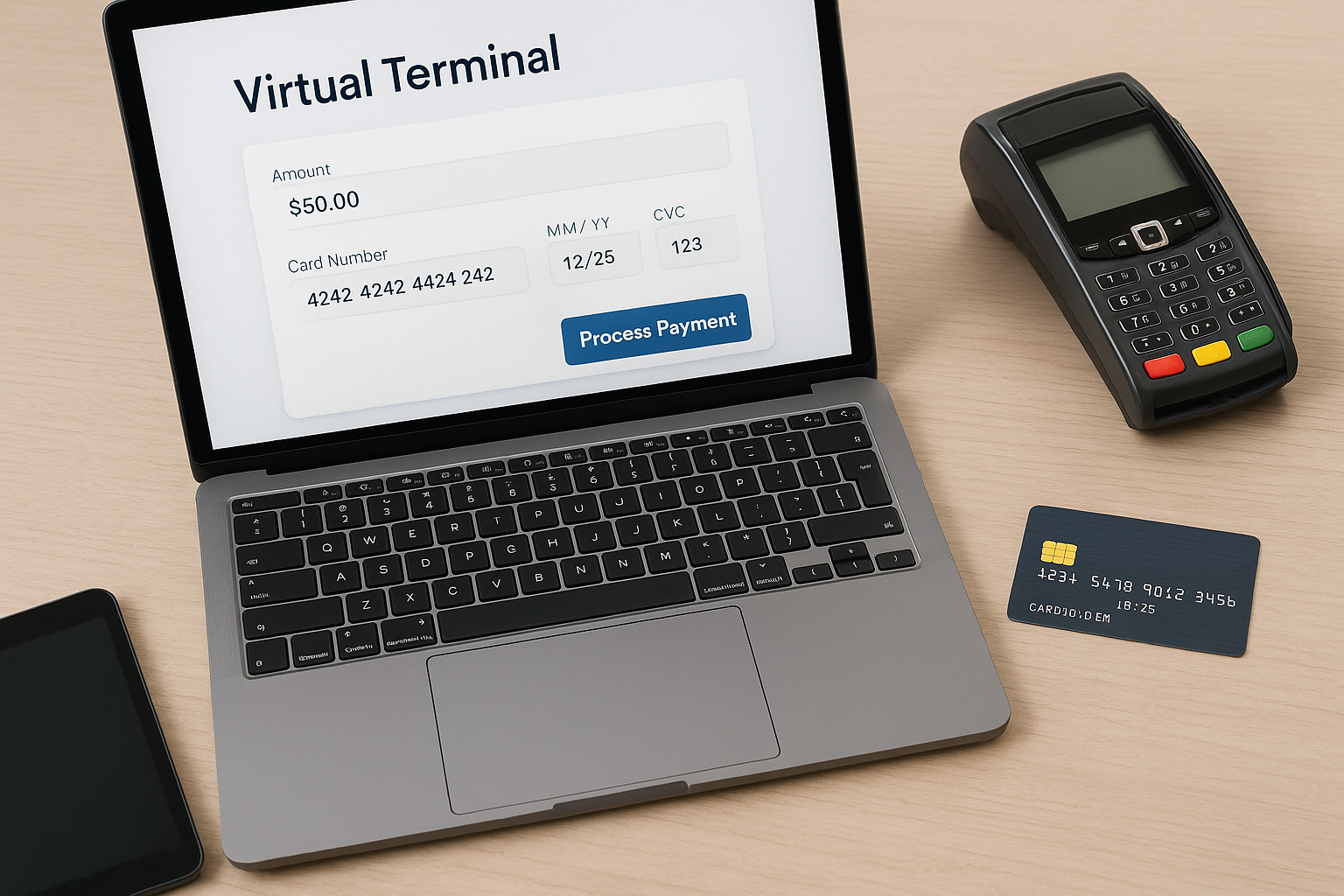
A virtual terminal is a web-based payment tool that allows businesses to accept card-not-present payments from a computer, tablet, or smartphone. Instead of swiping, dipping, or tapping a card in a physical point-of-sale system, a team member manually enters the customer’s payment details into a secure online form. This makes it especially useful for phone orders, mail orders, recurring billing, and remote services.
In simple terms, a virtual terminal turns any internet-connected device into a payment acceptance station. It is often used by businesses that take orders over the phone, send invoices, or need a flexible way to process payments without being tied to a countertop register.
How Does a Virtual Terminal Work?
The process is straightforward. A staff member logs into a secure payment portal provided by a payment processor or merchant services provider. They then enter the customer’s payment information, along with the purchase amount and any relevant order details. Once submitted, the payment is authorized and processed in real time, just like in a traditional card transaction.
Depending on the provider, a virtual terminal may support credit cards, debit cards, ACH bank transfers, and sometimes stored customer profiles for repeat billing. Some systems also integrate with invoicing tools, customer relationship management software, and accounting platforms, which helps reduce manual work and improve recordkeeping.
Because the transaction is entered manually, the merchant does not physically handle the customer’s card. Instead, the customer provides the details by phone, through a secure payment link, or via another approved remote channel.
Who Uses a Virtual Terminal?
Virtual terminals are popular with businesses that do not always operate in person or need a backup payment method. Common users include:
- Service providers such as plumbers, consultants, and repair technicians
- Professional practices that bill clients by phone or after appointments
- Nonprofits taking donations over the phone
- Wholesalers and B2B companies processing remote orders
- Subscription-based businesses managing recurring charges
- Restaurants and retail stores accepting call-in orders
Any business that needs to accept payments without a card reader can benefit from this setup. It is especially helpful for teams that work in multiple locations or provide services off-site.
Key Features of a Virtual Terminal
Manual Card Entry
The core feature of a virtual terminal is manual payment entry. A user types in the card number, expiration date, CVV, billing address, and transaction amount. This allows businesses to accept payments even when the customer is not present.
Recurring Billing
Many virtual terminals support recurring payments. This is valuable for membership organizations, subscription services, retainers, and installment plans. Saved customer profiles can make repeat billing faster and more accurate.
Invoice and Receipt Tools
Some platforms let businesses generate invoices, send payment reminders, and issue digital receipts. These features help streamline the payment process and keep customers informed.
Reporting and Transaction History
Virtual terminals usually include dashboards that show past transactions, refunds, and settlement details. This makes it easier to track revenue, resolve disputes, and reconcile accounts.
Security Controls
Good virtual terminal systems offer permissions, encryption, tokenization, and audit trails. These controls help protect sensitive payment data and limit access to authorized staff members.
Benefits of Using a Virtual Terminal
One of the biggest advantages of a virtual terminal is flexibility. Businesses can accept payments from virtually anywhere, as long as they have an internet connection. That means less dependence on physical hardware and more ability to serve customers remotely.
Another major benefit is convenience. Employees can process payments quickly without requiring the customer to visit a store or wait for a mailed invoice. This can improve cash flow and reduce the time spent on follow-up billing.
Virtual terminals can also be cost-effective. For businesses that do not need a full POS system or expensive card reader setup, a browser-based solution may be a simpler option. It can also reduce the need for paper forms and manual data entry.
In addition, virtual terminals can improve customer service. They make it easier to take orders on the spot, process emergency payments, and support customers who prefer to pay over the phone. For service businesses, that speed and flexibility can make a meaningful difference.
Virtual Terminal vs. POS System
A virtual terminal and a point-of-sale system both process payments, but they are designed for different situations. A POS system is usually built for in-person transactions at a physical location and often includes hardware such as card readers, printers, and cash drawers.
A virtual terminal, by contrast, is software-based and focused on remote or card-not-present transactions. It is ideal for businesses that accept payments by phone, email, or invoice rather than at a checkout counter.
Many businesses use both. For example, a retail store may rely on POS software for in-store sales and a virtual terminal for phone orders or special services. Together, they create a more complete payment strategy.
Security and Compliance Considerations
Because virtual terminals handle sensitive payment information, security should be a top priority. Businesses should choose a provider that follows PCI DSS standards and offers strong encryption to protect cardholder data.
It is also important to limit access to the system. Only trained, authorized employees should be allowed to process transactions. Strong passwords, user permissions, and activity logs can reduce the risk of fraud or accidental misuse.
If your business stores customer payment details for recurring billing, make sure the provider uses tokenization or another secure storage method. This reduces the chance that sensitive data will be exposed if a system is compromised.
Training also matters. Staff should know how to confirm customer identity, handle chargebacks, and avoid writing down card numbers in unsafe places. A secure virtual terminal setup is only effective when paired with good internal practices.
How to Choose the Right Virtual Terminal
When comparing virtual terminal providers, start by looking at pricing. Some charge monthly fees, while others include the terminal as part of a broader merchant services package. You should also review transaction fees, chargeback fees, and any add-on costs for reporting or integrations.
Next, consider usability. A good virtual terminal should be easy for your team to learn and simple to navigate. If your staff processes payments frequently, a clean interface can save time and reduce mistakes.
Integration is another key factor. If your business uses accounting software, invoicing tools, or a CRM, look for a terminal that connects smoothly with your existing systems. This can help automate workflows and improve accuracy.
Finally, evaluate support and reliability. Payment processing is mission-critical, so responsive customer service and dependable uptime matter. A provider with strong support can help resolve issues before they affect revenue.
Best Practices for Using a Virtual Terminal
To get the most from a virtual terminal, establish a clear process for each transaction. Verify customer details carefully, confirm the purchase amount before submitting payment, and record order information accurately.
Train employees to recognize suspicious transactions and to follow company policies for refunds and disputes. If possible, use customer profiles for repeat buyers to reduce manual entry and improve consistency.
It is also wise to review reports regularly. Monitoring transaction trends can help identify errors, spot unusual activity, and improve your overall payment operations.
Conclusion
A virtual terminal is a simple but powerful tool for businesses that need to accept payments without a physical card reader. It offers flexibility, convenience, and secure processing for phone orders, recurring billing, and remote sales. With the right provider and good internal practices, a virtual terminal can become an essential part of a modern payment strategy.