Interchange plus pricing is one of the most transparent ways to pay for credit card processing. Instead of wrapping all processing fees into a single blended rate, this model breaks costs into two parts: the actual card network interchange fee and the processor’s markup. For many merchants, that clarity can make it easier to understand what they are paying for and why.
What Is Interchange Plus Pricing?
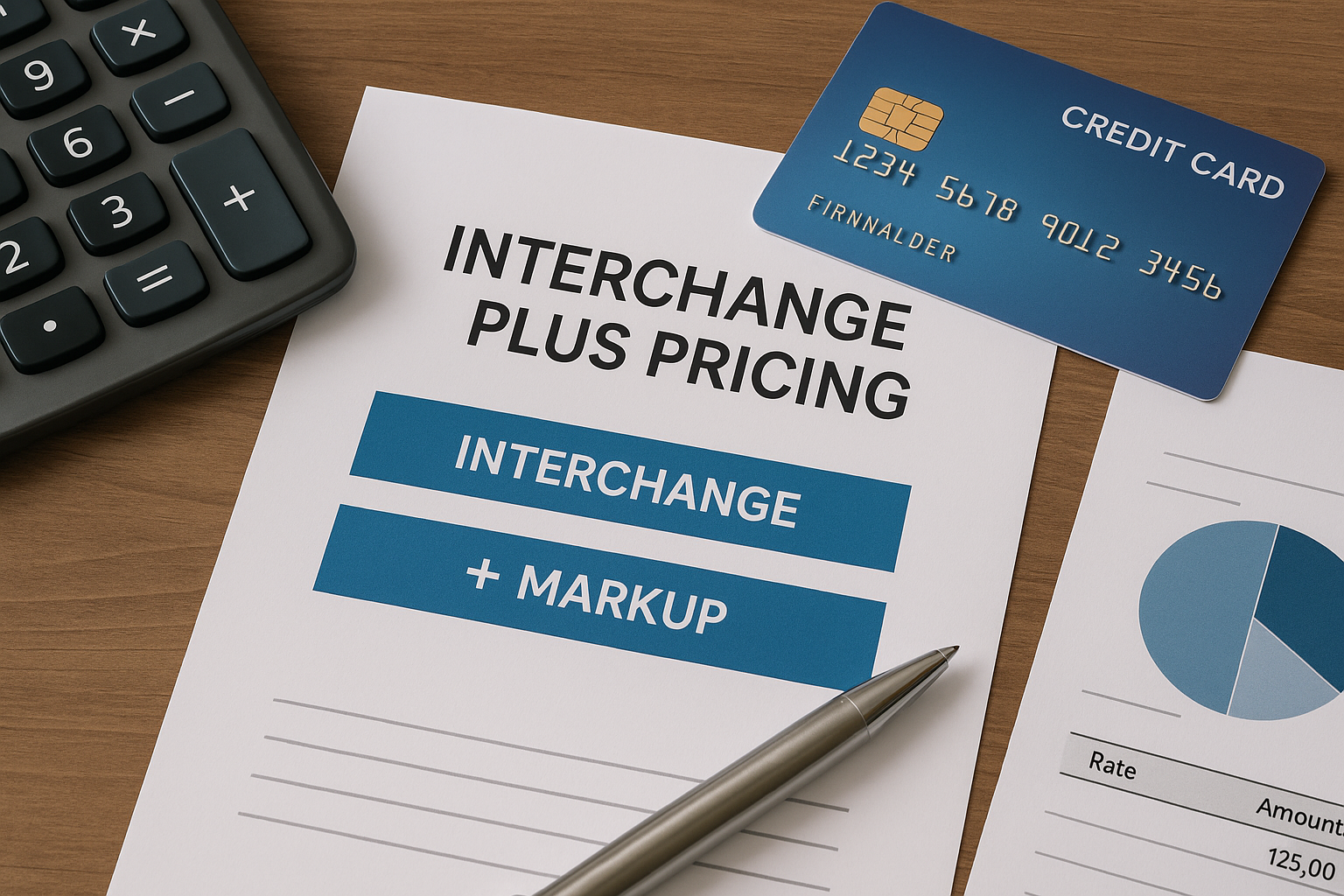
Interchange plus pricing, often called interchange++ or simply IC+, is a payment processing model where merchants pay the card issuer’s interchange fee plus a fixed processor fee. The interchange fee is set by the card brands, such as Visa or Mastercard, while the processor adds a transparent markup for its services.
This differs from flat-rate or tiered pricing, where the processor bundles costs together and presents a single rate that may be easier to read but harder to evaluate. With interchange plus, you can see the actual underlying cost of each transaction and the processor’s margin separately.
How It Works
When a customer pays by card, the transaction passes through several parties: the merchant, the payment processor, the card network, and the issuing bank. The issuing bank sets the interchange fee, which compensates it for handling risk, fraud, and rewards programs. The processor then charges its own markup, often expressed as a percentage plus a small fixed fee per transaction.
For example, a transaction might include a 1.80% interchange fee, a 0.20% card network assessment, and a 0.30% processor markup. In that case, the total cost would be the sum of those components. Because each piece is visible, merchants can better estimate their true processing expenses.
Benefits of Interchange Plus Pricing
Interchange plus pricing is popular with merchants that want transparency and control. It may not always be the cheapest option in every situation, but it offers several clear advantages.
Transparent Cost Breakdown
One of the biggest benefits is transparency. You can see exactly how much goes to the card networks and how much goes to your processor. That makes it easier to compare providers and identify unnecessary fees.
Potential for Lower Costs
For businesses with a meaningful monthly card volume, interchange plus pricing can often be more cost-effective than flat-rate pricing. Since the processor’s markup is fixed, you only pay the actual interchange rates assigned to each transaction type rather than a blended average that may include extra padding.
Fairer for Higher Volume Merchants
Businesses that process many transactions, especially those with a mix of card types, may benefit from interchange plus more than from flat-rate plans. As volume grows, small differences in markup can add up, so having a transparent pricing model becomes even more valuable.
Better for Comparing Processors
Because the markup is separate, it is easier to compare processors side by side. You can evaluate the non-interchange portion of the pricing without guessing what is hidden inside a bundled rate. That makes contract negotiations more straightforward as well.
Drawbacks of Interchange Plus Pricing
While interchange plus pricing has a lot to offer, it is not perfect for every business. Understanding the downsides can help you decide whether it is the right fit.
Can Be Harder to Predict
Since interchange fees vary depending on card type, transaction method, industry, and whether a card is present, total processing costs may fluctuate from month to month. This can make budgeting a little more complex than with a simple flat rate.
Statements May Be Complex
Interchange plus statements often include many line items and abbreviations. Merchants who are unfamiliar with payment processing may find them confusing at first. However, once you understand the structure, the detail can become an advantage rather than a burden.
Not Always Best for Very Small Merchants
Businesses with low monthly card volume may prefer the simplicity of flat-rate pricing. If your transaction count is low, the difference between pricing models may be small, and the convenience of a single rate can outweigh the benefits of interchange plus.
Who Should Use Interchange Plus Pricing?
Interchange plus pricing works well for many types of businesses, but it is especially useful for merchants who want visibility into their processing costs. It is commonly a strong fit for growing businesses, retailers, restaurants, B2B companies, and eCommerce stores with steady transaction volume.
If your business processes enough card payments that fee differences matter, interchange plus is often worth a close look. It is also a good choice if you plan to negotiate with processors and want a pricing model that is easy to verify.
On the other hand, if you process only a handful of transactions each month and value simplicity above all else, a flat-rate plan may be easier to manage. The key is to match the pricing model to your business size, payment mix, and need for cost transparency.
How to Evaluate an Interchange Plus Offer
Not all interchange plus offers are created equal. Two processors may advertise the same model but charge very different markups and ancillary fees. That is why it is important to look beyond the headline rate.
Check the Processor Markup
Ask for the exact markup structure. Many providers charge a percentage plus a per-transaction fee, while others may include monthly fees, gateway fees, statement fees, or PCI compliance charges. Make sure you understand every recurring cost.
Look at Contract Terms
Review the length of the contract, cancellation policy, and whether there are early termination fees. A low markup is less attractive if you are locked into unfavorable terms or expensive penalties.
Review the Statement Sample
Request a sample statement before signing up. A clear statement should make it easy to distinguish interchange costs from processor fees. If the statement is difficult to read, it may be harder to track your true costs later.
Compare Total Effective Rate
The effective rate is your total processing fees divided by total sales volume. It gives you a practical way to compare offers across different pricing models. While the advertised markup matters, the effective rate tells you what you are actually paying.
Interchange Plus Pricing vs. Flat-Rate Pricing
Flat-rate pricing charges one set percentage, usually with a per-transaction fee, regardless of card type. This makes it simple and predictable, which is why many small businesses like it. However, the simplicity can come at a premium because the provider averages in higher-cost transactions.
Interchange plus pricing is more detailed and often more economical for businesses with higher volume or more expensive transaction types. If you want transparency and the possibility of lower long-term costs, interchange plus usually has the edge. If you want one easy number and minimal complexity, flat-rate pricing may be more appealing.
Final Thoughts
Interchange plus pricing gives merchants a transparent and often cost-effective way to pay for card processing. By separating actual interchange fees from processor markup, it makes pricing easier to understand and compare. While the statements can be more detailed than other models, the added visibility is a major advantage for many businesses.
If you are reviewing payment processors, take the time to look closely at the full fee structure, contract terms, and expected transaction mix. The right pricing model can help you control costs and make smarter decisions as your business grows.