
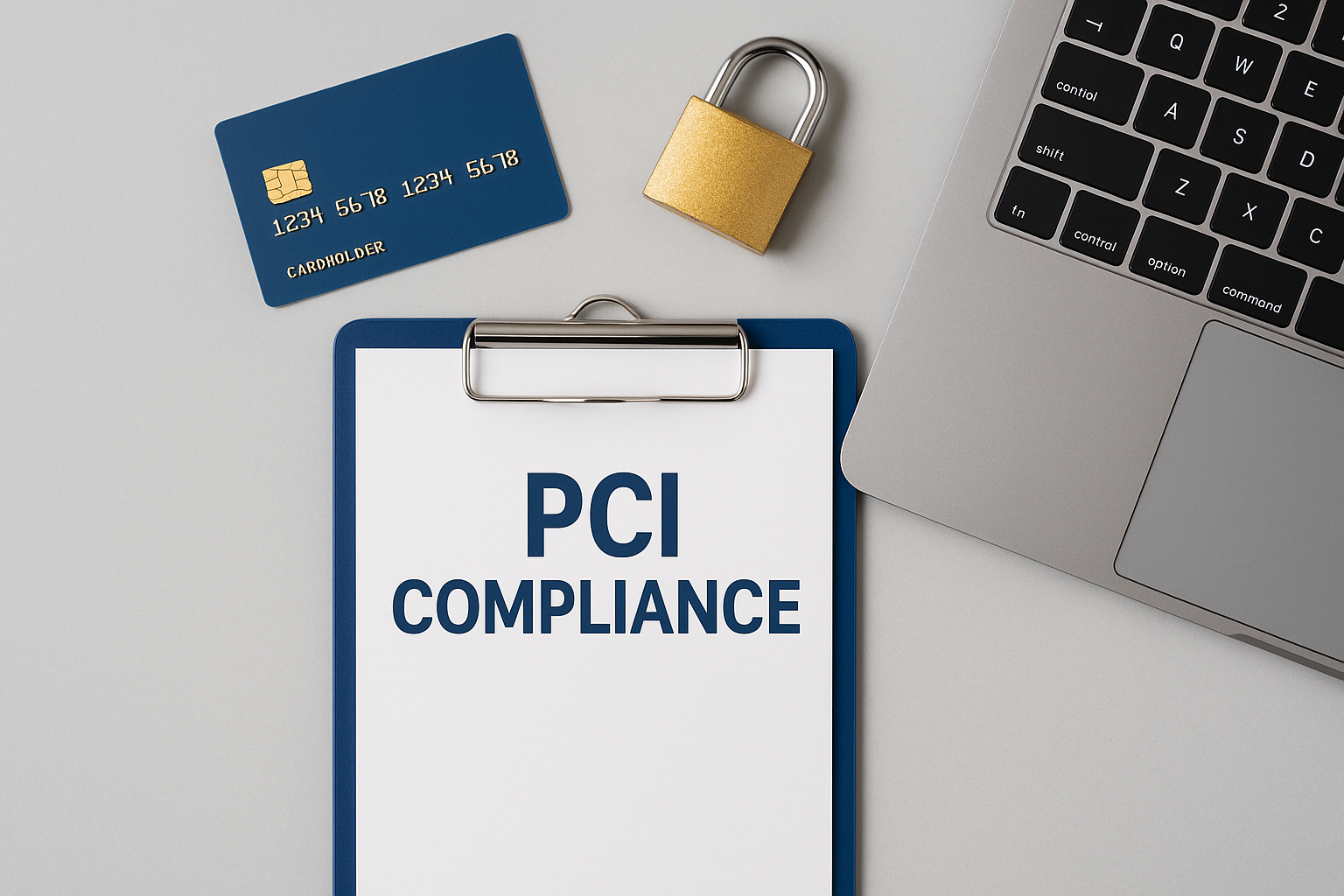
What Is PCI Compliance?
PCI compliance refers to following the Payment Card Industry Data Security Standard (PCI DSS), a set of security requirements designed to protect cardholder data. Any business that stores, processes, or transmits credit or debit card information is expected to follow these standards, regardless of size or industry.
The PCI DSS was created by major card brands to reduce the risk of payment card fraud and data breaches. In practical terms, PCI compliance helps businesses build stronger security practices around payment systems, customer data, and access control.
Why PCI Compliance Matters
PCI compliance is not just a box to check. It plays a major role in protecting your business and your customers from costly security incidents. Cardholder data is highly valuable to cybercriminals, making payment systems a frequent target for attacks.
Failing to meet PCI requirements can lead to serious consequences, including:
- Data breaches and theft of customer payment information
- Fines and penalties from payment processors or card brands
- Loss of customer trust and damage to your reputation
- Higher transaction fees or the inability to process card payments
For many businesses, PCI compliance also supports broader security goals. The controls required by PCI DSS often improve overall cybersecurity, reduce internal risk, and help teams create more secure operational processes.
Who Needs to Be PCI Compliant?
Any organization that handles cardholder data in some way should pay attention to PCI compliance. This includes:
- Retail stores and eCommerce businesses
- Restaurants and hospitality providers
- Healthcare providers that accept card payments
- Software companies with payment functionality
- Service providers that store or transmit payment data
Even if a company uses a third-party payment processor, it may still have PCI responsibilities. For example, if your website accepts payments through an embedded checkout or stores partial card details, you may still need to complete PCI validation steps.
The 12 Core PCI DSS Requirements
PCI DSS is built around 12 key requirements grouped into six main security objectives. These requirements provide a framework for protecting payment data throughout the business environment.
1. Build and Maintain a Secure Network
Businesses must install and maintain firewalls and avoid using vendor-supplied default passwords. This helps prevent unauthorized access to systems that handle card data.
2. Protect Cardholder Data
Stored cardholder data must be encrypted or otherwise protected. Sensitive data should only be retained when there is a legitimate business need.
3. Maintain a Vulnerability Management Program
Organizations should use antivirus tools where appropriate and regularly patch systems. Security updates are critical for reducing the risk of known exploits.
4. Implement Strong Access Control Measures
Only authorized personnel should have access to systems and data related to card payments. Access should be limited to what each user needs to do their job.
5. Monitor and Test Networks Regularly
Businesses are expected to track activity, review logs, and test security controls. Monitoring helps identify suspicious behavior before it becomes a larger issue.
6. Maintain an Information Security Policy
A formal policy helps guide employees on how to handle payment data securely. Security awareness and training are essential parts of compliance.
Common PCI Compliance Challenges
Many businesses struggle with PCI compliance because payment systems often involve multiple tools, vendors, and departments. Common challenges include:
- Not knowing where cardholder data is stored
- Using outdated systems or unsupported software
- Lack of employee training on security practices
- Improper network segmentation
- Assuming a payment processor handles all compliance responsibilities
Another common issue is over-collecting sensitive data. If a business stores more payment information than it needs, it increases both compliance burden and security risk. The best approach is to reduce the amount of card data in your environment whenever possible.
How to Achieve PCI Compliance
Getting PCI compliant typically involves a combination of technical controls, internal policies, and documentation. The exact process depends on your business size, transaction volume, and how you process payments.
Step 1: Determine Your PCI Scope
Start by identifying all systems, people, and processes that touch cardholder data. The smaller your PCI scope, the easier compliance will be to manage.
Step 2: Complete the Appropriate Validation
Many merchants complete a Self-Assessment Questionnaire (SAQ), while larger organizations may require a formal audit by a Qualified Security Assessor (QSA). The validation method depends on your merchant level and payment setup.
Step 3: Secure Your Environment
Apply the PCI DSS requirements to your systems. This may include encryption, patching, access restrictions, firewall configuration, endpoint protection, and secure authentication methods.
Step 4: Train Employees
Employees should understand how to recognize risky behavior, protect customer data, and report security concerns. Human error is one of the most common causes of security incidents.
Step 5: Monitor and Review
Compliance is not a one-time task. Review logs, test systems, update policies, and reassess your environment regularly to stay aligned with PCI requirements.
Best Practices for Staying PCI Compliant
Once your business achieves compliance, the next step is maintaining it. These best practices can help make compliance more manageable over time:
- Use tokenization or third-party payment gateways to reduce exposure to card data
- Keep software, plugins, and operating systems up to date
- Restrict administrative access and use multi-factor authentication
- Encrypt sensitive data both in transit and at rest
- Review vendor security practices before sharing payment information
- Document policies, procedures, and remediation efforts
It is also helpful to assign clear responsibility for PCI compliance within your organization. Whether that role sits with IT, security, finance, or operations, ownership helps ensure tasks do not fall through the cracks.
The Business Benefits of PCI Compliance
Although PCI compliance is often viewed as an obligation, it can also create meaningful business value. Strong payment security can improve customer confidence and reduce the likelihood of disruptions caused by security incidents.
Compliance can also support smoother vendor relationships, strengthen internal controls, and create a more disciplined approach to data management. In many cases, the practices required for PCI compliance align closely with sound cybersecurity fundamentals.
Conclusion
PCI compliance is essential for any business that handles payment card data. By understanding the requirements, reducing exposure, and maintaining strong security practices, organizations can protect customer information and lower the risk of fraud or breaches. The key is to treat PCI compliance as an ongoing process, not a one-time project.