Credit card processing is evolving quickly, and 2026 is shaping up to be a year of major change for merchants, payment providers, and customers alike. Faster checkout expectations, stronger security demands, and continued growth in digital commerce are pushing the payments industry to become more intelligent, more flexible, and more connected. For businesses, keeping up with these shifts is no longer optional. The right payment strategy can improve conversion rates, reduce fraud, and create a better customer experience.
Below are the biggest credit card processing trends to watch in 2026 and what they could mean for your business.
1. Faster, Frictionless Checkout Will Become the Standard
Customers increasingly expect checkout to take only a few seconds. In 2026, merchants will continue moving away from slow, multi-step payment flows and toward seamless experiences that minimize typing and clicks. One-click checkout, saved credentials, digital wallets, and tokenized payment methods are becoming baseline expectations rather than premium features.
This trend is driven by the rise of mobile shopping and the fact that even a small delay can lead to cart abandonment. Businesses that simplify the payment experience often see better conversion rates and stronger repeat purchase behavior. For online merchants, this means optimizing checkout pages, reducing unnecessary form fields, and making sure payment options are clearly displayed.
What businesses should do
- Offer multiple fast payment methods, including digital wallets and stored cards.
- Reduce friction in the checkout flow by removing extra steps.
- Test mobile checkout regularly to ensure it is fast and easy to use.
2. Artificial Intelligence Will Improve Fraud Detection
Fraud prevention has always been central to credit card processing, but in 2026, AI-driven systems will play a larger role in spotting suspicious activity in real time. Traditional fraud rules are often too rigid, causing false declines or missing more advanced threats. AI tools can analyze large volumes of transaction data, identify unusual patterns, and adapt faster than manual systems.
For merchants, this means better protection against chargebacks and stolen card use without creating unnecessary friction for legitimate customers. AI can also support dynamic risk scoring, helping processors approve good transactions faster while flagging risky ones for review.
What businesses should do
- Work with payment providers that use machine learning for fraud detection.
- Monitor chargeback trends and transaction patterns closely.
- Balance fraud controls with customer experience to avoid false declines.
3. Tap-to-Pay and Contactless Payments Will Keep Growing
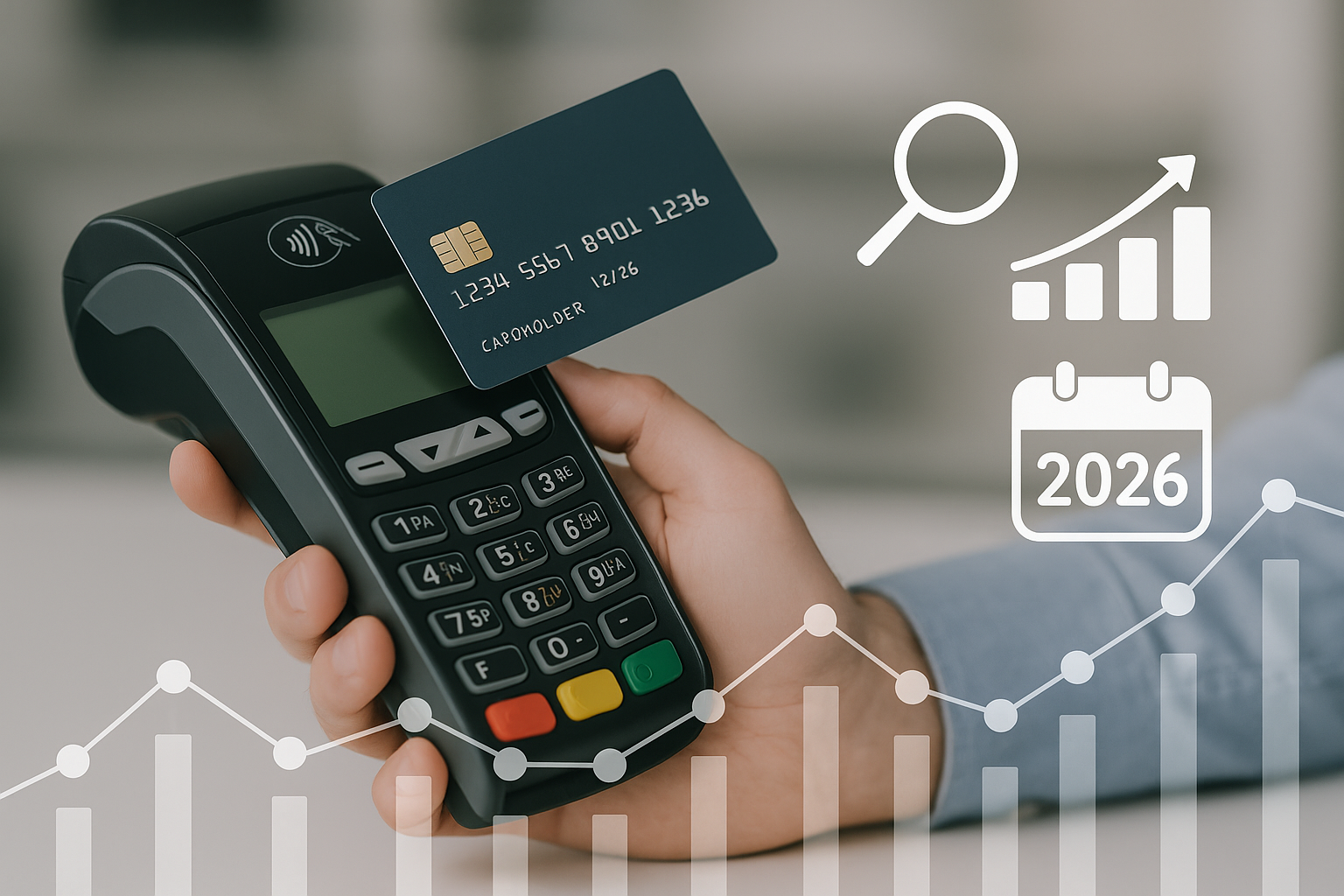
Contactless payments are no longer just a convenience; they are becoming a mainstream expectation in both physical stores and service-based businesses. Tap-to-pay cards, mobile wallets, and contactless terminals make checkout faster and reduce the need for customers to hand over a card or touch a keypad.
In 2026, this trend will continue expanding across retail, restaurants, hospitality, and even field service businesses. As more consumers adopt tap-based payments, merchants that do not support contactless options risk appearing outdated and less convenient.
What businesses should do
- Upgrade terminals to support tap-to-pay and mobile wallet transactions.
- Train staff to promote contactless payment options.
- Ensure payment hardware works smoothly across in-store and mobile environments.
4. Embedded Payments Will Expand Across Software Platforms
More software platforms are embedding payment functionality directly into their products. This is especially important for vertical software providers, marketplaces, booking systems, and platforms that want to keep users inside one ecosystem. Instead of sending customers to a separate processor or portal, embedded payments allow transactions to happen directly within the software experience.
In 2026, embedded payments will continue gaining traction because they create a more seamless user journey, increase revenue opportunities for software providers, and simplify reconciliation for businesses. For merchants, this often means fewer manual steps and better reporting. For software companies, it opens the door to payment monetization and stronger retention.
What businesses should do
- Evaluate whether embedded payments can simplify your customer experience.
- Look for processors with strong API and platform integration capabilities.
- Prioritize payment systems that support reporting, onboarding, and reconciliation.
5. Real-Time Payments and Instant Settlement Will Gain Momentum
Cash flow remains one of the biggest concerns for businesses, especially small and mid-sized companies. That is why real-time payments and faster settlement options are becoming more valuable. In 2026, more merchants will look for ways to access funds quickly rather than waiting days for deposits to clear.
While card settlement has traditionally taken time, payment processors are responding with faster funding solutions, instant payout options, and improved settlement tools. For businesses with tight margins or high transaction volume, this can make a meaningful difference in daily operations.
What businesses should do
- Ask processors about same-day funding or instant payout features.
- Review settlement schedules and cash flow needs regularly.
- Compare the cost of faster funding against the value of improved liquidity.
6. Subscription Billing and Recurring Payments Will Become Smarter
Subscription models are growing across industries, from software and fitness to retail and professional services. In 2026, recurring billing systems will become more intelligent, helping businesses reduce failed payments, manage plan changes, and personalize billing options.
Advanced billing platforms can retry failed transactions automatically, update expired cards through account updater tools, and provide customers with flexible payment timing. This improves retention and reduces involuntary churn, which is one of the biggest challenges in subscription-based businesses.
What businesses should do
- Use recurring billing tools that support smart retries and card updates.
- Offer clear self-service options for payment updates and plan changes.
- Track churn reasons to improve retention strategies.
7. Security and Compliance Will Remain Top Priorities
As payment technology advances, security requirements will continue to tighten. Businesses in 2026 will need to stay on top of PCI compliance, data protection, and cardholder authentication standards. With the rise of online fraud, breaches, and identity theft, merchants cannot afford to treat security as an afterthought.
Tokenization, encryption, biometric authentication, and stronger identity verification tools will become more common. At the same time, customers are paying closer attention to how their data is handled. A secure payment experience helps build trust and protects a brand’s reputation.
What businesses should do
- Keep PCI compliance processes current.
- Use processors that offer tokenization and encryption by default.
- Review authentication and data protection practices regularly.
8. Omnichannel Payment Experiences Will Be Essential
Customers do not think in channels; they think in experiences. They may browse on a phone, buy online, pick up in-store, and request support through an app. In 2026, merchants will need to connect these touchpoints through an omnichannel payment strategy that keeps transaction data consistent across every sales channel.
This means unified reporting, shared customer profiles, and payment systems that work across ecommerce, in-store, invoicing, and mobile sales. Businesses that connect these channels can better understand customer behavior and provide a smoother overall experience.
What businesses should do
- Adopt payment tools that support online and offline transactions.
- Unify reporting across all sales channels.
- Use customer data to create a more consistent buying journey.
Conclusion
Credit card processing in 2026 will be defined by speed, intelligence, convenience, and security. From AI-powered fraud detection to frictionless checkout and omnichannel payments, the businesses that adapt early will be better positioned to meet customer expectations and improve operational efficiency. The key is to choose payment solutions that are flexible, secure, and ready for the future of commerce.
If your business is reviewing its payment strategy, now is the time to evaluate your current systems and identify where faster, smarter, and more connected processing can create an advantage.