Credit Card Processing Trends for 2026
Credit card processing is changing fast, and 2026 is shaping up to be a year of major progress for merchants, payment providers, and customers alike. From faster checkout experiences to stronger fraud controls and more flexible payment options, the trends emerging now are setting the standard for how businesses will accept payments in the near future.
For businesses, keeping up with these changes is no longer optional. Customers expect secure, seamless, and convenient payment experiences wherever they shop, whether that is in-store, online, through mobile apps, or on social platforms. The companies that adapt early will be better positioned to reduce friction, improve approval rates, and build customer loyalty.
1. Real-Time Payments Will Influence Card Processing
Real-time payments have gained significant momentum, and their growth is influencing how card processors design systems and services. While credit card networks are different from bank transfer rails, the demand for instant settlement and faster fund access is pushing the payments industry to modernize.
In 2026, more processors are likely to focus on near-instant reporting, faster merchant funding, and streamlined reconciliation tools. Businesses want visibility into cash flow without waiting days for deposits to clear. That pressure is encouraging providers to offer better dashboards, real-time transaction insights, and automated settlement tools.
For merchants, faster access to funds can improve operations, especially for businesses with tight inventory cycles or seasonal demand. It can also help reduce reliance on short-term financing.
2. Artificial Intelligence Will Improve Fraud Detection
Fraud prevention remains one of the most important priorities in card processing, and artificial intelligence is playing a bigger role every year. By 2026, AI-powered fraud detection will be more advanced, more adaptive, and more embedded into everyday payment workflows.
Instead of relying only on static rules, processors are increasingly using machine learning to identify unusual spending patterns, device inconsistencies, and suspicious transaction behavior in real time. This helps reduce false declines while also catching fraudulent activity faster.
For businesses, this means better approval rates and fewer lost sales. For customers, it creates a smoother checkout experience with less friction. The challenge will be balancing strong security with minimal interruption, and the best processors will be those that make risk decisions intelligently without blocking legitimate purchases.
3. Tap-to-Pay and Contactless Payments Will Continue to Expand
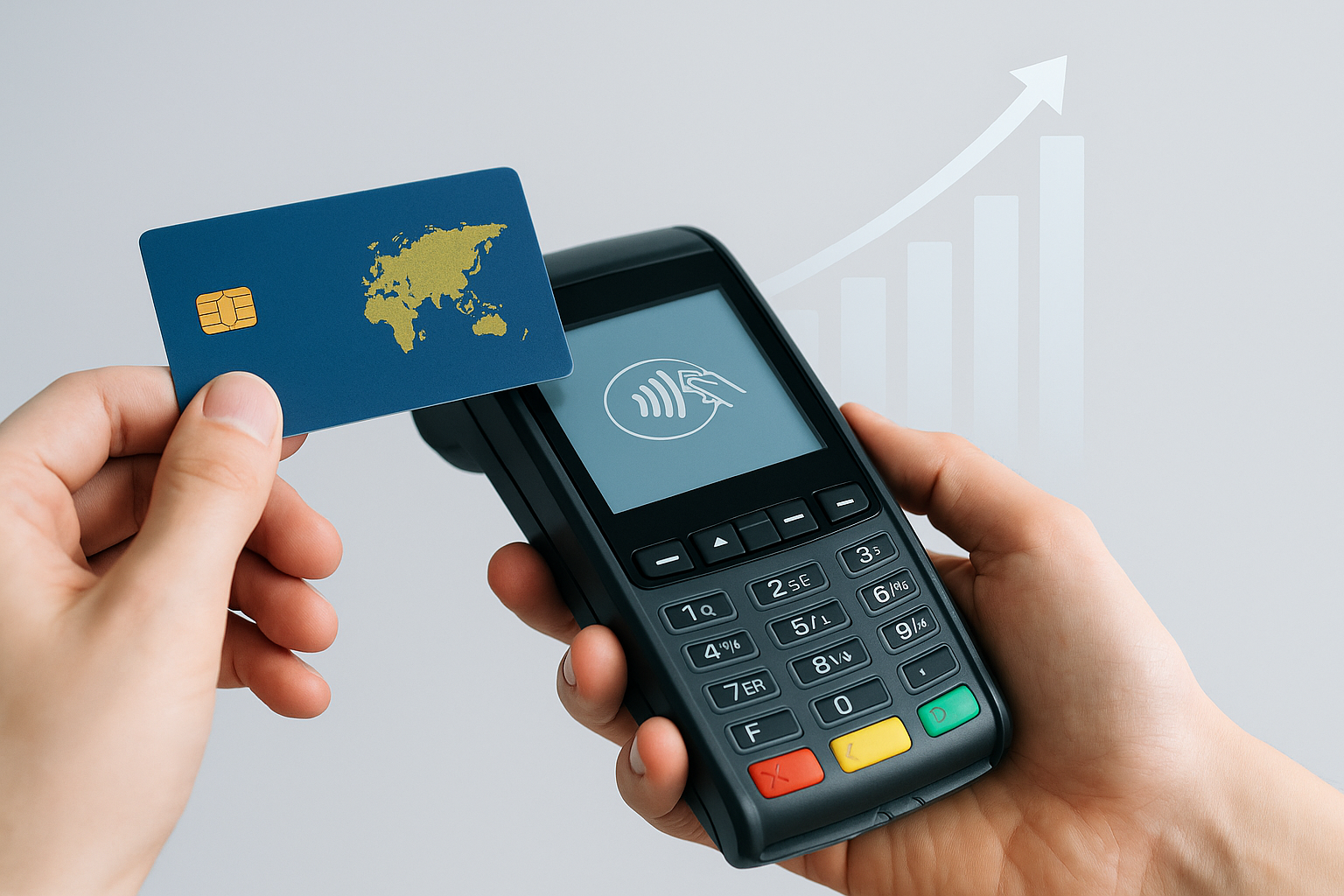
Contactless payment methods became mainstream quickly, and their growth is expected to continue through 2026. Tap-to-pay cards, mobile wallets, and contactless terminals have become standard in many markets, and customers now expect this convenience almost everywhere.
This trend is especially important for physical stores, restaurants, transportation, and events where speed matters. Contactless checkout reduces wait times, improves throughput, and creates a more modern customer experience. It can also lower wear and tear on payment terminals since fewer magnetic stripe and chip insertions are needed.
Merchants that have not yet upgraded to contactless-ready hardware may find it harder to compete. In 2026, offering tap-to-pay will likely be seen less as a nice feature and more as a baseline expectation.
4. Omnichannel Payments Will Become More Connected
Customers do not think in channels; they think in experiences. They may browse on a phone, buy on a laptop, and pick up in-store. In 2026, card processing systems will continue moving toward fully connected omnichannel experiences that unify transactions across every sales channel.
This means merchants will need payment systems that can recognize repeat customers, track purchase history, support stored payment methods, and maintain consistent fraud controls across online and offline environments. A disconnected payment setup can create confusion, duplicate records, and missed opportunities for personalization.
Businesses that adopt integrated omnichannel payment platforms will have a clearer view of customer behavior and revenue performance. They will also be better equipped to offer flexible purchasing options like buy online, pick up in store, subscriptions, and recurring billing.
5. Embedded Payments Will Grow Across Software Platforms
Embedded payments are becoming a major trend because more software platforms want to offer payments directly within their products. Instead of sending users to separate payment systems, software providers are building card processing into the tools businesses already use.
In 2026, expect embedded payments to expand across industries such as healthcare, home services, field service management, education, and professional services. This approach simplifies billing, reduces manual work, and creates a more seamless user experience.
For merchants, embedded payments can mean less complexity and fewer disconnected vendors. For software companies, payments become a valuable revenue stream. This trend also supports better automation, such as invoicing, customer portals, and recurring charge management.
6. Security and Compliance Will Remain a Top Priority
As payment systems become more connected and more digital, the need for strong security and compliance grows even more important. In 2026, businesses should expect continued focus on PCI compliance, tokenization, encryption, authentication, and secure data handling.
Consumers are increasingly aware of data privacy and cybersecurity risks. They want assurance that their card information is protected every time they make a purchase. Merchants that fail to maintain strong safeguards can face chargebacks, reputational damage, and financial penalties.
Processors will likely continue investing in secure infrastructure, advanced authentication methods, and tools that reduce exposure to sensitive card data. Businesses should also prioritize staff training and internal controls so that security practices are consistent across the organization.
7. Subscription Billing and Recurring Payments Will Keep Expanding
Recurring payments are no longer limited to gyms and streaming services. More businesses now rely on subscription billing, installment plans, retainers, and automatic renewals. In 2026, this trend will continue as companies look for predictable revenue and customers look for payment convenience.
Modern credit card processing systems are improving subscription management with features like card updater services, smart retry logic, and dunning workflows. These tools help reduce involuntary churn caused by expired cards or failed payments.
For businesses that bill customers regularly, better recurring payment infrastructure can improve cash flow and reduce administrative work. It can also create a more reliable customer experience by preventing service interruptions.
8. Payment Orchestration Will Gain More Attention
As merchants grow, they often work with multiple payment providers, gateways, and fraud tools. Payment orchestration helps manage these moving parts through a single layer that routes transactions intelligently and improves performance.
By 2026, more businesses will look to payment orchestration to reduce downtime, increase authorization rates, and support global expansion. It can also help merchants test different processors, manage redundancy, and optimize costs.
This trend is especially valuable for larger businesses and fast-growing brands that need flexibility. Rather than relying on a single processing path, orchestration creates more control and resilience.
9. Faster Checkout Experiences Will Be the Standard
Speed matters in every environment, and card processing technology is being designed to remove unnecessary steps from checkout. In 2026, customers will expect faster payment flows whether they are shopping online, paying at the register, or completing a transaction in an app.
Features like saved payment credentials, one-click checkout, autofill support, digital wallets, and biometric authentication will help shorten the path to payment. Merchants that reduce friction can see higher conversion rates and fewer abandoned carts.
At the same time, fast checkout must still feel secure. The most successful processors will be the ones that combine convenience and protection without creating extra hurdles for legitimate customers.
10. Data and Analytics Will Drive Better Payment Decisions
Payment data is becoming more valuable for business strategy. In 2026, merchants will increasingly rely on analytics to understand approval rates, chargeback trends, customer behavior, and processor performance.
Better reporting tools can reveal where transactions fail, which payment methods perform best, and how to improve the customer experience. Businesses that use data well can identify issues early and make smarter decisions about pricing, risk, and operations.
As competition increases, data-driven optimization will be a key advantage. Credit card processing will no longer be viewed as just a back-office function. It will be a strategic part of growth.
Conclusion
Credit card processing in 2026 will be defined by speed, security, flexibility, and smarter technology. Businesses that invest in modern payment tools will be better equipped to meet customer expectations and adapt to an evolving payments landscape. Whether the focus is fraud prevention, contactless checkout, or omnichannel integration, the future of card processing is centered on creating smoother experiences for everyone involved.
The businesses that stay informed and proactive will have the strongest advantage as payment trends continue to evolve.