What Are Tiered Pricing Merchant Services?
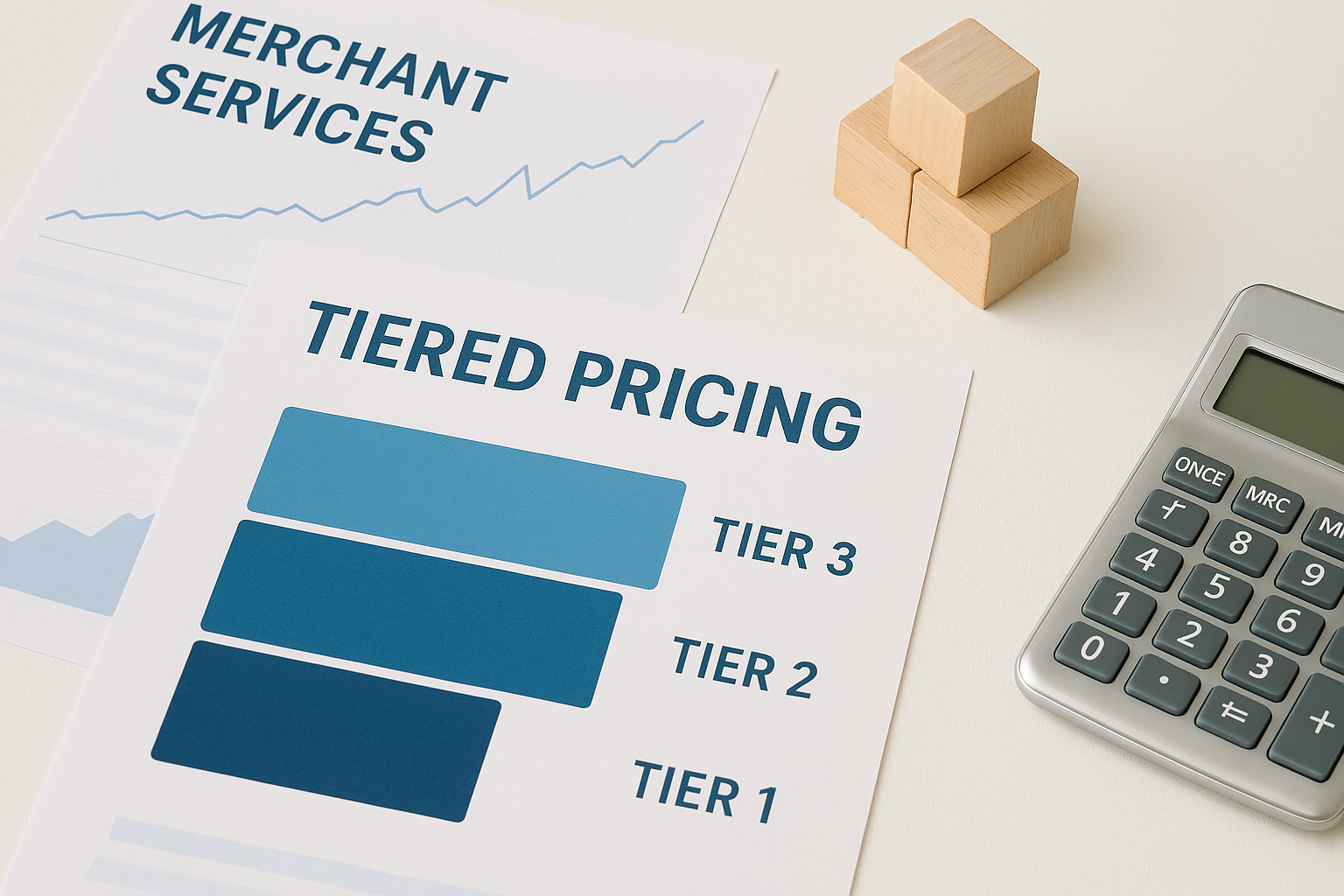
Tiered pricing merchant services is a payment processing model that groups credit and debit card transactions into different pricing categories, or “tiers,” rather than charging one flat rate for every transaction. In this model, processors typically sort transactions into three main tiers: qualified, mid-qualified, and non-qualified.
This pricing structure is common in traditional merchant account agreements. It can appear simple at first glance, but the actual cost depends on how each transaction is categorized. For business owners, understanding tiered pricing is important because it can affect profit margins, monthly processing costs, and the overall transparency of merchant service fees.
How Tiered Pricing Works
With tiered pricing, a processor assigns each transaction to a tier based on several factors, such as the type of card used, how the transaction is processed, and the level of risk associated with the sale. Each tier has a different rate.
Qualified Transactions
Qualified transactions usually receive the lowest rate. These are often standard consumer cards that are swiped or inserted in person, with all the required details captured correctly. Because they are considered lower risk, they cost the least to process.
Mid-Qualified Transactions
Mid-qualified transactions fall into the middle tier and usually carry a higher rate than qualified sales. These may include transactions that are keyed in manually, use business cards, or do not meet every condition for the lowest tier.
Non-Qualified Transactions
Non-qualified transactions are the most expensive tier. These may involve rewards cards, premium cards, international cards, or transactions that present a higher risk of chargebacks or fraud. In many cases, the processor has more discretion in placing transactions into this tier.
Why Businesses Use Tiered Pricing
Some merchants choose tiered pricing because it can seem straightforward. Processors often market the lowest qualified rate prominently, which makes the offer look attractive. For businesses with mostly in-person, card-present sales and low-risk customers, the qualified rate may apply often enough to keep costs manageable.
However, the structure can be less predictable than it first appears. A business may be quoted a competitive rate, only to find that a large portion of transactions land in higher-priced tiers. That is why understanding the full fee structure matters before signing a merchant services agreement.
Pros and Cons of Tiered Pricing Merchant Services
Advantages
One benefit of tiered pricing is that it can be easy to explain at a high level. Business owners can quickly see that some transactions are priced lower than others. It may also work reasonably well for merchants whose sales patterns fit the processor’s ideal profile, especially those with mostly card-present transactions and low average ticket sizes.
Another potential advantage is that the lowest advertised rate may look more competitive than a flat-rate plan, especially for businesses with a high percentage of qualified transactions.
Disadvantages
The biggest drawback is unpredictability. Merchants do not always control how transactions are categorized, and the criteria for each tier can be broad or unclear. This can make it difficult to estimate true processing costs from month to month.
Tiered pricing can also hide markups. A processor may advertise a low qualified rate while earning more from mid-qualified and non-qualified transactions. In some cases, additional monthly fees, statement fees, PCI compliance charges, and batch fees can further increase the total cost.
For businesses that take many keyed-in, online, or business-card transactions, tiered pricing may become expensive quickly. That is why it is essential to compare the effective rate, not just the headline rate.
How to Tell If Tiered Pricing Is Right for Your Business
Tiered pricing may be a decent fit if your business processes a high volume of standard, card-present transactions and your sales mix is relatively consistent. Examples may include retail shops, quick-service restaurants, and some service providers with mostly in-person payments.
On the other hand, businesses with e-commerce sales, phone orders, recurring billing, international customers, or a high number of corporate and rewards cards may see more transactions shifted into expensive tiers. In those cases, interchange-plus pricing or flat-rate pricing may offer better transparency.
The best approach is to review your actual transaction patterns. Look at your average ticket, payment methods, sales channels, and chargeback risk. Then compare those details against the processor’s fee structure before making a decision.
Questions to Ask Before Signing a Tiered Pricing Agreement
Before agreeing to tiered pricing merchant services, ask the provider for a full written breakdown of rates and fees. Important questions include:
- What transaction types qualify for each tier?
- Which card brands and card types are considered mid-qualified or non-qualified?
- Are keyed-in, online, or recurring payments charged at higher rates?
- What monthly fees, statement fees, PCI fees, or early termination fees apply?
- Can the processor provide sample statements showing real-world costs?
These questions can help reveal whether the pricing structure is truly competitive or just advertised that way.
How to Compare Tiered Pricing with Other Models
When comparing merchant services, do not focus only on the lowest advertised rate. Instead, calculate the effective rate by dividing total processing fees by total sales volume. This gives you a clearer picture of what you are actually paying.
It is also smart to compare tiered pricing with interchange-plus pricing. Interchange-plus separates the card network’s base cost from the processor’s markup, which often makes pricing more transparent. Flat-rate pricing, meanwhile, may be simpler for very small businesses or those with modest monthly volume.
The right model depends on your business type, sales volume, average ticket size, and payment mix. A restaurant may have very different needs than a subscription-based software company or an online retailer.
Tips for Lowering Processing Costs
Even if you stay with a tiered pricing structure, there are ways to reduce costs. Encourage customers to use chip or tap payments instead of keyed-in entries. Keep your payment equipment updated and compliant to avoid unnecessary downgrades. Make sure transactions are settled promptly and that your business information is accurate with your processor.
You can also review statements regularly for hidden fees or unexpected rate changes. If you notice more transactions moving into higher tiers, ask your provider why. Sometimes small operational changes can improve your processing profile and lower fees over time.
Conclusion
Tiered pricing merchant services can work for some businesses, but they are not always the most transparent or cost-effective option. By understanding how tiers are assigned, what fees apply, and how your transactions are likely to be categorized, you can make a smarter decision for your business. The key is to look beyond the advertised rate and focus on your true total cost of acceptance.