What Are NFC Payments?
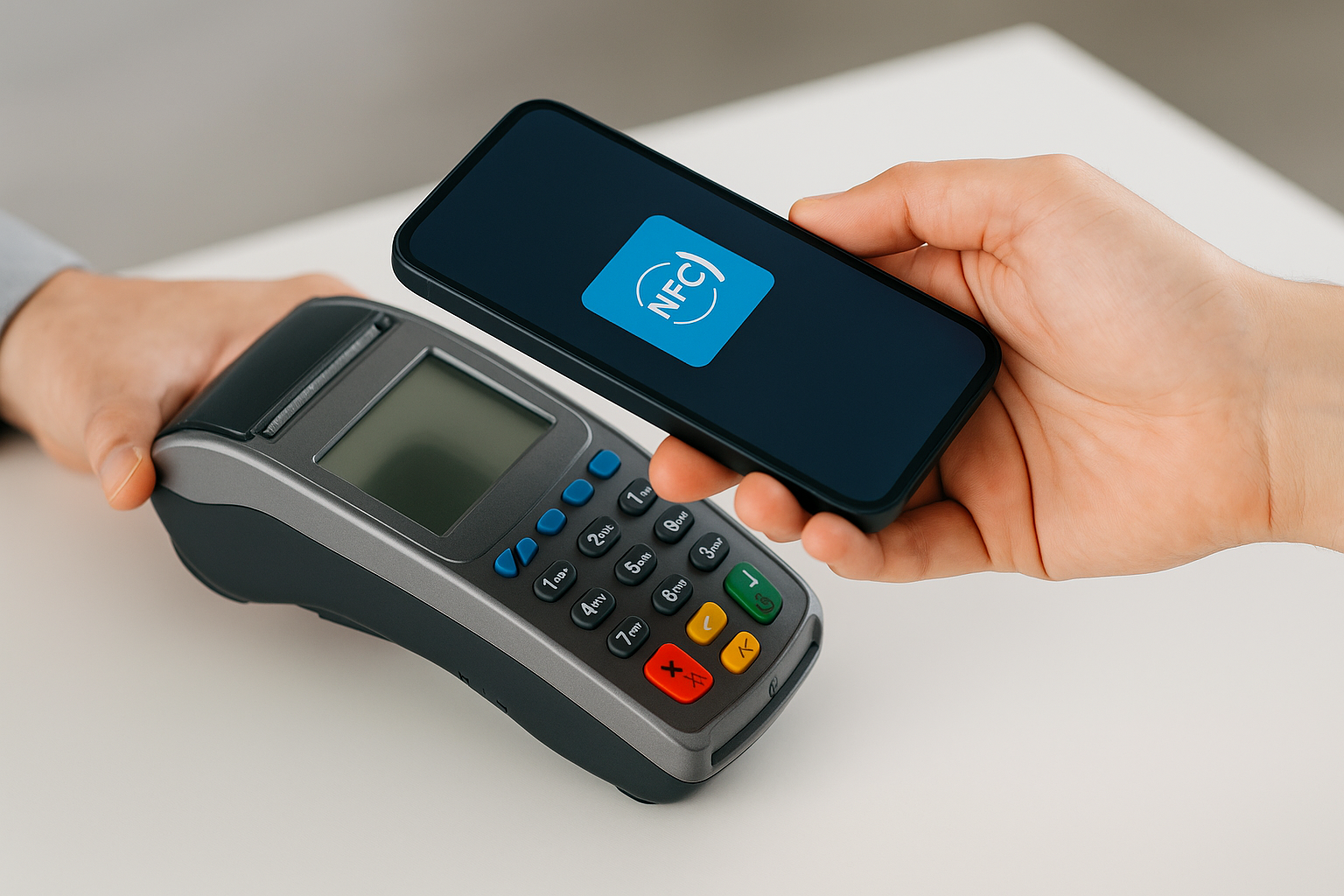
NFC payments are contactless transactions made using Near Field Communication, a short-range wireless technology that allows two devices to exchange data when they are very close together. In practice, this usually means tapping a phone, smartwatch, or contactless card at a payment terminal to complete a purchase.
Because NFC works over just a few centimeters, it is designed for speed, convenience, and security. You can pay without inserting a card, typing a PIN for small purchases, or handing over cash. That makes NFC payments especially popular for everyday transactions like coffee runs, grocery shopping, public transit, and retail checkout.
The technology is built into most modern smartphones and many payment cards, so adoption has grown quickly around the world. As more merchants support tap-to-pay terminals, NFC payments are becoming a standard part of modern commerce.
How NFC Payments Work
The basic process
The payment process is simple. First, the customer unlocks their device or presents a contactless card. Next, the NFC chip communicates with the terminal when the two are brought close together. The terminal then sends payment details to the card network and bank for approval. If the transaction is approved, the purchase is completed within seconds.
For mobile wallets such as Apple Pay, Google Pay, and Samsung Pay, the actual card number is not usually shared with the merchant. Instead, a token or device-specific code is used. This adds a layer of protection because the real card data is not exposed during the transaction.
NFC vs. QR codes and magnetic stripe cards
NFC payments differ from QR code payments because no camera scan is required. They are usually faster and more seamless at the point of sale. Compared with magnetic stripe cards, NFC is more secure because the card data is not swiped and copied in the same way. It also reduces physical wear on cards and terminals.
Benefits of NFC Payments
Convenience and speed
One of the biggest advantages of NFC payments is speed. Customers can complete transactions in seconds, which helps shorten checkout lines and improves the overall shopping experience. This is especially valuable in busy environments like cafes, convenience stores, stadiums, and transit systems.
Improved security
NFC payments are generally considered secure because they use short-range communication, encryption, and tokenization in many digital wallet systems. Since the payment device must be very close to the reader, the risk of accidental interception is low. Many mobile wallets also require authentication through a fingerprint, face scan, or passcode before the payment can be made.
Better customer experience
Consumers increasingly expect frictionless payment options. NFC supports that expectation by making checkout faster and easier. It also gives people more flexibility, allowing them to pay with a phone, watch, or contactless card instead of carrying cash or digging through a wallet.
Operational efficiency for businesses
For merchants, NFC can reduce checkout time and help keep lines moving. Faster transactions can lead to higher customer satisfaction and potentially more sales during peak hours. Contactless payments can also reduce handling of cash and simplify payment workflows.
Where NFC Payments Are Used
Retail stores and restaurants
NFC is now common in grocery stores, pharmacies, clothing shops, and restaurants. Many businesses have upgraded point-of-sale terminals to accept tap-to-pay cards and mobile wallets because customers increasingly expect contactless options.
Public transportation
Transit systems in many cities use NFC for tap-in and tap-out fare payments. This reduces bottlenecks at gates and kiosks, making commutes smoother for riders.
Events and entertainment
Concert venues, sports arenas, and festivals also benefit from NFC payments. Faster payments help reduce lines at concessions and merchandise stands, improving the overall event experience.
Everyday digital wallet use
Many people use NFC every day without thinking about it. Paying with a smartwatch at a grocery store or tapping a phone at a coffee shop are both common examples of NFC in action. The same technology can also be used for identity verification, loyalty programs, and access control.
Security Considerations for NFC Payments
Why NFC is secure
NFC payments have several built-in security advantages. The short communication range makes it difficult for a malicious actor to intercept a transaction from a distance. In addition, tokenization replaces sensitive card information with a digital token, which helps protect the real account number.
Mobile devices often add another layer of protection through biometric authentication or device passcodes. Even if someone gets hold of your phone, they may still be unable to make a payment without unlocking it first.
Potential risks and how to reduce them
While NFC is generally safe, users should still take basic precautions. Keep your phone protected with a strong passcode or biometric lock, enable notifications for card activity, and review payment history regularly. If you use a contactless card, store it securely to avoid unauthorized use for low-value transactions.
Businesses should also ensure their terminals are compliant, updated, and configured properly. Good security practices, staff training, and prompt fraud monitoring all help reduce risk.
Challenges and Limitations of NFC Payments
Device and terminal compatibility
Not every device or point-of-sale system supports NFC. Although adoption is widespread, some smaller merchants or older terminals may still rely on chip-and-PIN, magnetic stripe, or QR-based systems. That can limit the usability of NFC in certain places.
Battery dependence for mobile wallets
Unlike a physical card, a phone or smartwatch may run out of battery. If that happens, users could lose access to their mobile wallet temporarily. Contactless cards offer a useful backup in those situations.
Learning curve for some users
Although NFC payments are simple once you try them, some people still prefer familiar payment methods. New users may need guidance on how to activate a wallet, authenticate a transaction, or know where to tap the device for a successful payment.
The Future of NFC Payments
The future of NFC payments looks strong as contactless habits continue to grow. More consumers are choosing mobile wallets, and more businesses are upgrading terminals to accept tap-to-pay. As this ecosystem expands, NFC will likely play a larger role in retail, transportation, and service industries.
We can also expect NFC to become more integrated with loyalty programs, digital IDs, access badges, and even smart home experiences. As financial technology evolves, the convenience of a quick tap will continue to shape how people pay and interact with services.
In the years ahead, NFC may become less of a special feature and more of the default way to pay in many situations. That shift will benefit both customers and businesses by making transactions faster, safer, and more efficient.
Conclusion
NFC payments have changed the way people pay by making transactions fast, secure, and easy to use. Whether through a phone, smartwatch, or contactless card, the tap-to-pay experience offers clear benefits for both consumers and merchants. As more businesses adopt contactless terminals, NFC will continue to be an important part of everyday commerce.