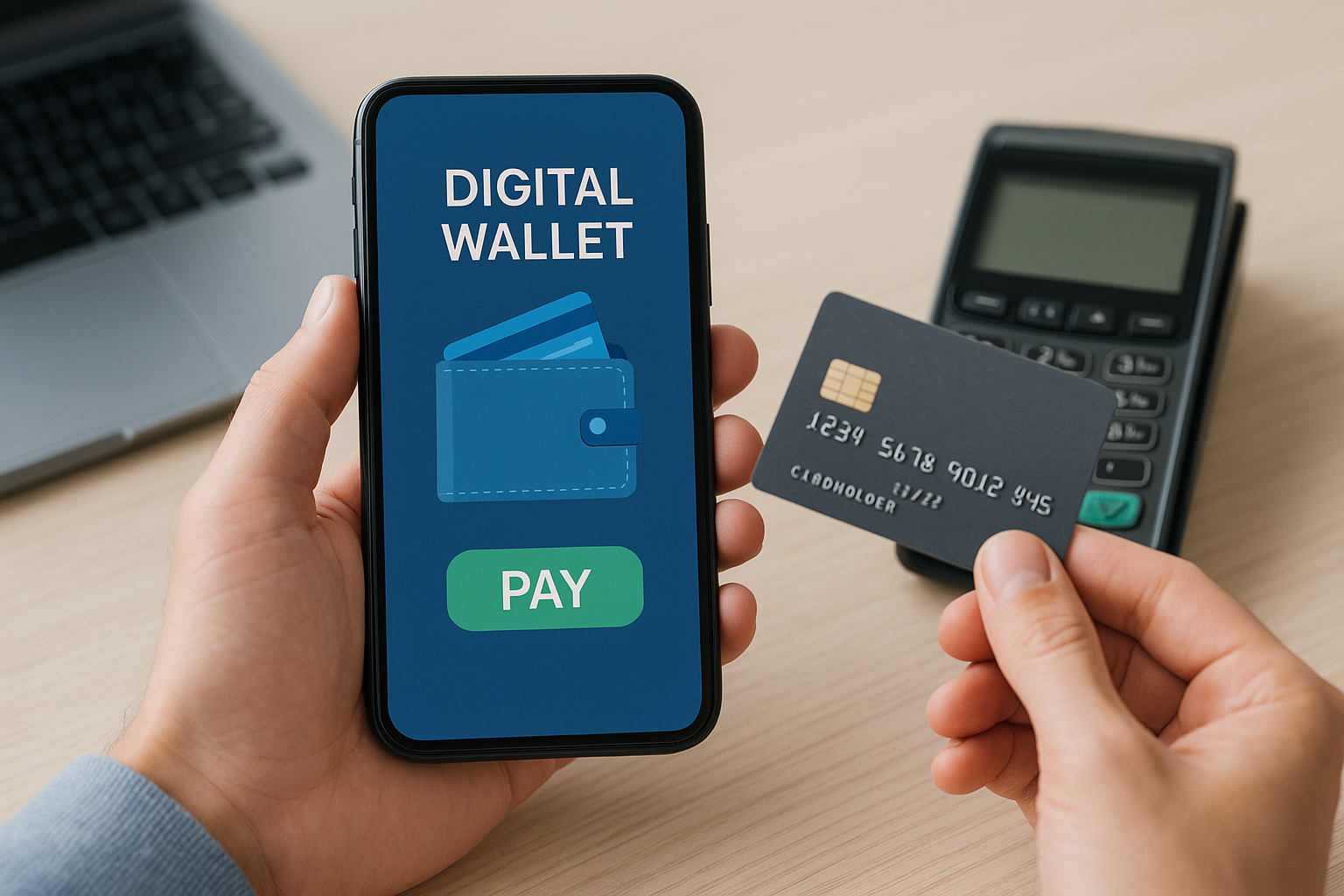
What Are Digital Wallet Payments?
Digital wallet payments let people store payment details on a phone, tablet, smartwatch, or computer and use them to pay online or in person. Instead of entering card numbers every time, users can complete a purchase with a tap, scan, or click. Popular examples include Apple Pay, Google Pay, Samsung Wallet, PayPal, and many banking apps that support wallet-based checkout.
At a basic level, a digital wallet acts like a secure version of a physical wallet. It can hold debit and credit cards, loyalty cards, tickets, transit passes, and sometimes even IDs or keys. For consumers, the appeal is convenience. For businesses, the appeal is faster checkout, higher conversion rates, and often better security than traditional card entry.
How Digital Wallet Payments Work
Digital wallet payments rely on a combination of software, encryption, and tokenization. When a user adds a card to a wallet, the wallet does not usually store the actual card number for transactions. Instead, it replaces that information with a unique token that represents the card.
When a payment is made, the wallet sends the token and transaction details to the payment network and bank for authorization. The merchant receives confirmation without ever seeing the full card number. This process reduces exposure of sensitive data and makes it harder for fraudsters to reuse stolen information.
There are two main ways digital wallets are used:
- In-store payments: Customers tap their device at a contactless terminal using NFC technology.
- Online payments: Customers select a wallet option at checkout and confirm payment without typing card details.
Some wallets also support peer-to-peer transfers, recurring subscriptions, and in-app purchases, making them useful across many payment scenarios.
Benefits of Digital Wallet Payments
1. Faster Checkout
One of the biggest advantages of digital wallet payments is speed. Users can pay in seconds, which is especially helpful for mobile shopping and busy retail environments. Fewer steps in checkout often mean fewer abandoned carts and shorter lines at the register.
2. Improved Security
Digital wallets often use tokenization, biometric authentication, and device-level security such as passcodes or facial recognition. Because merchants typically do not receive actual card numbers, the risk of sensitive data theft is reduced. If a phone is lost, the wallet can often be disabled remotely.
3. Better Customer Experience
Convenience matters. Customers appreciate being able to pay without reaching for a physical card or re-entering billing details. A smooth checkout experience can build trust and encourage repeat purchases.
4. Support for Modern Commerce
Digital wallets fit well with ecommerce, mobile apps, subscriptions, and omnichannel retail. They also support the growing demand for contactless, low-friction payments in restaurants, transportation, entertainment, and service businesses.
5. Reduced Cart Abandonment
Online checkout friction is a major cause of cart abandonment. Offering wallet options can reduce the number of fields customers need to fill out, helping businesses capture more completed sales.
Types of Digital Wallets
Digital wallets generally fall into three categories:
- Closed wallets: These are used within a specific company or platform. Funds can usually only be spent with that provider.
- Open wallets: These support payments at multiple merchants and often allow bank transfers, card payments, and cash withdrawals.
- Crypto wallets: These store digital assets such as cryptocurrencies and may be used for blockchain-based transactions.
Most businesses and consumers interact with open wallets or app-based wallets connected to cards and bank accounts. These are the most common for retail and ecommerce transactions.
Where Digital Wallet Payments Are Used
Digital wallet payments are now common in many industries. Retail stores use them at contactless terminals. Online merchants offer them at checkout for faster payment. Food delivery apps, ride-sharing platforms, and subscription services rely on wallet-based flows because they make recurring and one-click payments easier.
They are also widely used in travel and transportation. Airlines, train systems, event ticketing platforms, and transit agencies have adopted wallet integrations to streamline boarding, entry, and fare collection. In some markets, wallets are also used for bill payments, peer-to-peer transfers, and government services.
Security and Privacy Considerations
Although digital wallets are generally secure, users and businesses still need to follow best practices. Wallet security depends on strong device protection, trusted apps, and good account hygiene.
For consumers, important habits include:
- Using a strong passcode or biometric lock on devices
- Enabling two-factor authentication where available
- Downloading wallet apps only from official sources
- Reviewing transaction alerts regularly
- Removing old cards or unused accounts from the wallet
For merchants, security best practices include using PCI-compliant payment processors, keeping checkout systems updated, and monitoring for suspicious activity. While wallet payments reduce many risks, no payment method is completely immune to fraud or misuse.
How Businesses Can Accept Digital Wallet Payments
Accepting digital wallet payments is usually straightforward. Many payment processors already support wallet transactions through existing card-present and card-not-present infrastructure. Businesses may need compatible point-of-sale terminals for in-store contactless payments and a wallet-enabled checkout flow for online sales.
Steps for implementation often include:
- Confirming support with the payment gateway or processor
- Upgrading terminals or checkout software if needed
- Testing wallet transactions across devices and browsers
- Training staff to recognize wallet payment methods
- Promoting wallet acceptance at checkout and in marketing materials
Businesses that make acceptance visible often see more usage. A simple badge or message such as “Apple Pay accepted here” can reassure customers and encourage them to use their preferred payment method.
Future Trends in Digital Wallet Payments
Digital wallet payments continue to evolve quickly. More consumers are moving away from cash and physical cards in favor of mobile-first payment methods. As adoption grows, wallets are becoming more than payment tools—they are turning into everyday digital identity and commerce hubs.
Some important trends include:
- Expanded biometric security: Face and fingerprint authentication are becoming standard.
- Super app ecosystems: Wallets are increasingly bundling payments, rewards, transit, shopping, and messaging.
- Wearable payments: Smartwatches and other connected devices are making payments even more convenient.
- Cross-border use: Global wallet interoperability is improving for travelers and international shoppers.
- Integration with loyalty and identity: Wallets are beginning to store memberships, tickets, and verification credentials.
As technology improves, digital wallets will likely become an even more central part of the customer journey.
Conclusion
Digital wallet payments combine convenience, speed, and strong security features in a way that benefits both consumers and businesses. Whether used in-store, online, or within apps, wallets make payments easier and reduce friction at checkout. As adoption continues to grow, businesses that support digital wallet payments will be better positioned to meet modern customer expectations.