What Are Omnichannel Payments?
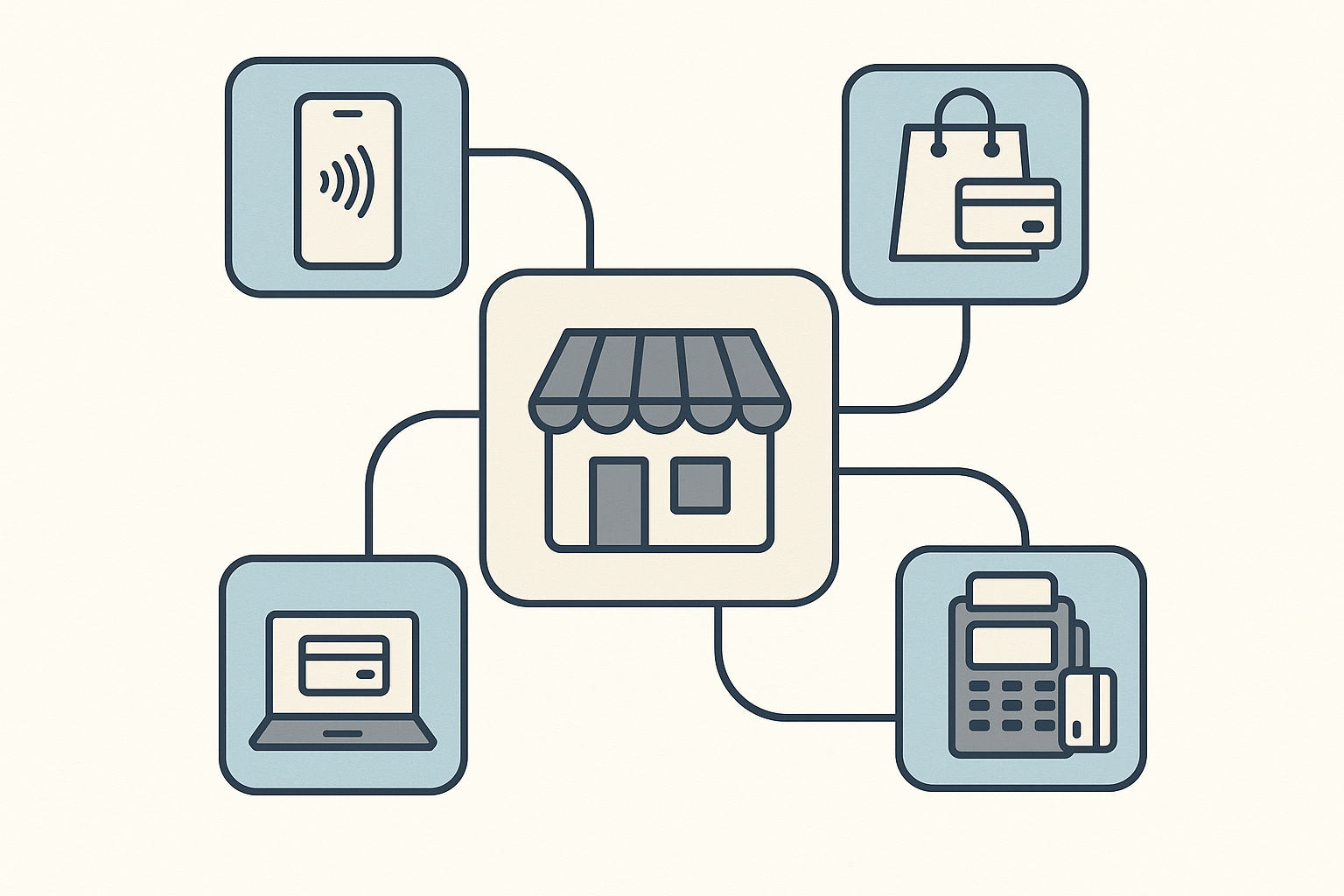
Omnichannel payments are a unified payment experience that lets customers start, pause, and complete purchases across multiple channels without friction. These channels can include in-store, mobile apps, websites, social commerce, marketplaces, call centers, and even recurring billing touchpoints. The goal is simple: make payment feel seamless no matter where the customer chooses to buy.
In an omnichannel model, payment data, customer preferences, and transaction history are connected across every touchpoint. That means a customer can browse online, add items to a cart on a mobile device, and finish the purchase in-store or through a link sent by email. Instead of treating each sales channel as a separate system, omnichannel payments create one connected commerce experience.
Why Omnichannel Payments Matter
Customer expectations have changed. People want convenience, flexibility, and consistency at every stage of the buying journey. If a customer sees one price online and a different one in-store, or if saved payment details do not carry across channels, trust can quickly erode. Omnichannel payments help businesses meet these expectations while reducing friction that can lead to abandoned carts or lost sales.
They also matter because buying journeys are no longer linear. A customer may discover a product on social media, compare it on a website, check reviews on a mobile device, and then purchase in a physical store. Businesses that can support this behavior are better positioned to capture more conversions and improve loyalty. In short, omnichannel payments are not just a technical upgrade; they are a core part of modern commerce strategy.
How Omnichannel Payments Work
At the heart of omnichannel payments is integration. Payment systems connect the front-end channels customers use with a central back-end platform that manages transactions, customer data, security, and reporting. When done well, this integration allows payment information to move securely between channels and gives businesses a single view of each customer’s activity.
For example, a retailer may use a point-of-sale system in-store, a checkout page on its website, and payment links for customer service teams. An omnichannel payment platform can unify these transactions so they all appear in one dashboard. This makes reconciliation easier, supports consistent refunds or exchanges, and helps businesses understand how customers interact across channels.
Many omnichannel systems also support tokenization, digital wallets, stored cards, buy now, pay later options, and recurring billing. These features help customers pay in the way that best suits their preferences, while businesses gain the operational efficiencies of centralized payment management.
Key Benefits of Omnichannel Payments
1. Better Customer Experience
The biggest benefit is a smoother, more convenient experience. Customers can choose their preferred channel without having to re-enter information or restart the process. This consistency reduces frustration and makes checkout faster, which can improve conversion rates.
2. Higher Sales and Conversions
When customers can pay wherever and however they want, it becomes easier to complete the purchase. Omnichannel payments reduce barriers at checkout, support cross-channel selling, and help recover sales that might otherwise be lost when a shopper switches devices or locations.
3. Stronger Customer Loyalty
A seamless payment experience builds trust. When a brand recognizes customers across channels and offers a consistent journey, shoppers are more likely to return. Loyalty grows when the buying experience feels effortless and personalized.
4. Improved Data and Insights
Omnichannel payments create a clearer picture of how customers behave. Businesses can analyze which channels drive the most purchases, which payment methods are most popular, and where customers drop off. These insights support better marketing, inventory, and customer service decisions.
5. Easier Operations and Reporting
Instead of managing separate payment systems for each channel, businesses can centralize processing and reporting. That simplifies reconciliation, reduces manual work, and helps finance teams track revenue more accurately across the business.
Common Omnichannel Payment Channels
Omnichannel payments can span many customer touchpoints. The most common channels include:
- In-store POS: Traditional card-present transactions, mobile POS, and contactless payments.
- Ecommerce checkout: Desktop and mobile website payments, including saved payment methods.
- Mobile apps: In-app purchases and digital wallet support.
- Social commerce: Payments completed through social media platforms or promoted product links.
- Call centers: Assisted payments taken over the phone with secure processing.
- Invoices and payment links: Useful for service businesses, B2B transactions, and remote sales.
The value of omnichannel payments comes from connecting these channels so the customer’s journey feels unified rather than fragmented.
Omnichannel Payments vs. Multichannel Payments
Multichannel and omnichannel are often used interchangeably, but they are not the same. Multichannel payment strategies support multiple channels, but those channels may operate independently. A customer experience may vary widely from one channel to another, and data may not flow smoothly between systems.
Omnichannel payments go further by integrating those channels into a connected ecosystem. The customer can move from one channel to another without losing context. For businesses, that means one shared view of transactions, customers, and payment behavior. In practice, omnichannel is about continuity, while multichannel is about presence.
Security Considerations
Because omnichannel payments involve multiple touchpoints, security must be built into every stage of the transaction. Businesses need strong encryption, tokenization, fraud monitoring, and access controls to protect sensitive payment data. Compliance with standards such as PCI DSS is essential, especially when payment information passes through several systems.
Additional security measures may include 3D Secure authentication, device fingerprinting, risk scoring, and real-time fraud detection. These tools help reduce chargebacks and protect both the business and the customer. A successful omnichannel strategy should make payments easier without compromising trust or safety.
Challenges of Implementing Omnichannel Payments
Although the benefits are clear, implementation can be complex. One of the biggest challenges is system integration. Legacy POS systems, ecommerce platforms, CRMs, and ERP tools may not easily communicate with one another. Businesses often need careful planning, technical expertise, and the right payment partner to create a unified setup.
Another challenge is maintaining a consistent customer experience across all channels. Pricing, refund policies, loyalty rewards, and payment methods need to align. If one channel offers features that another does not, the experience can feel disconnected. Businesses also need to manage data governance, security, and reporting across every interaction.
Costs can be a concern as well. Upgrading infrastructure, training staff, and migrating data all require investment. However, these costs are often offset by improved efficiency, better conversion rates, and stronger customer retention over time.
Best Practices for Omnichannel Payment Success
To get the most from omnichannel payments, businesses should focus on a few best practices:
- Choose a unified payment platform: Look for a solution that supports multiple channels and centralizes reporting.
- Prioritize customer convenience: Offer popular payment methods, including cards, wallets, bank transfers, and alternative options where relevant.
- Keep branding and policies consistent: Align checkout flows, refund rules, and customer communications across channels.
- Invest in security: Use tokenization, fraud tools, and compliance controls from the start.
- Use data to improve performance: Monitor transaction trends, cart abandonment, and channel performance regularly.
- Train teams across departments: Sales, support, finance, and store staff should understand how the payment experience works.
With the right strategy, omnichannel payments can become a competitive advantage rather than just an operational upgrade.
The Future of Omnichannel Payments
As commerce continues to evolve, omnichannel payments will become even more important. Customers expect faster checkout, more flexible payment options, and experiences that move easily between digital and physical environments. Emerging technologies such as embedded finance, AI-driven fraud prevention, and real-time payment rails will continue to shape how businesses design payment experiences.
We can also expect greater personalization. Businesses will increasingly use transaction data to tailor offers, recommend payment methods, and create more relevant customer journeys. The organizations that succeed will be those that treat payments not as a back-office function, but as a strategic part of the customer experience.
Conclusion
Omnichannel payments help businesses deliver a connected, flexible, and secure buying experience across every customer touchpoint. By unifying payment systems, companies can improve convenience, increase sales, and gain deeper insight into customer behavior. In a market where experience matters as much as product, omnichannel payments are a powerful way to stay competitive and build lasting loyalty.