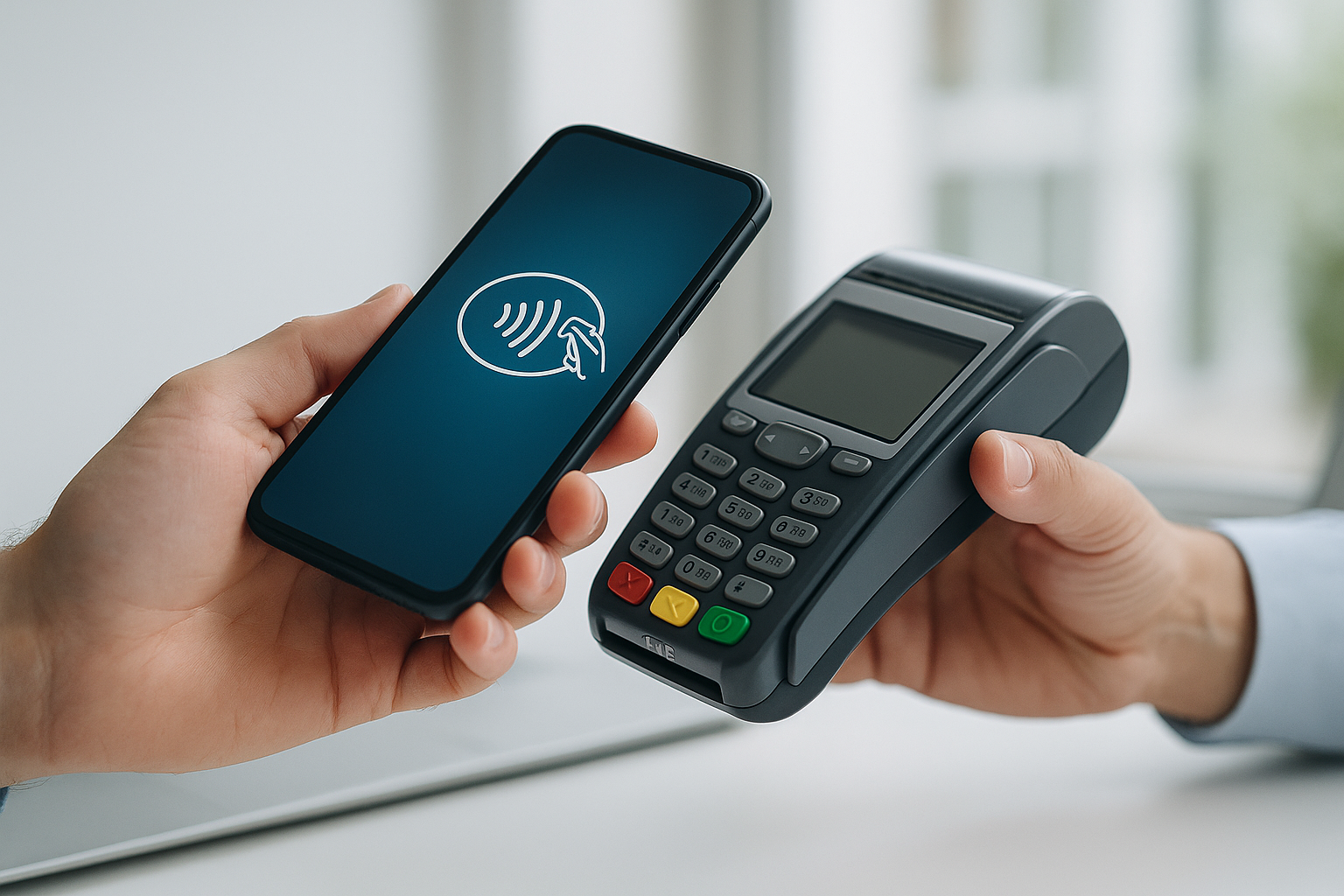
Near Field Communication, better known as NFC, has become one of the most convenient ways to pay in stores, on transit systems, and even at events. Instead of swiping a card or entering cash, customers simply tap a phone, smartwatch, or contactless card near a payment terminal. The transaction is completed in seconds, creating a fast, familiar, and secure checkout experience.
As digital wallets and contactless cards continue to grow in popularity, NFC payments are quickly becoming a standard part of everyday commerce. Understanding how they work, what makes them secure, and why businesses are adopting them can help both consumers and merchants make better payment decisions.
What Are NFC Payments?
NFC payments are contactless transactions that use near field communication technology to exchange payment data between two devices that are very close together, usually within a few centimeters. This technology allows a customer to “tap” a payment-enabled device on a point-of-sale terminal to complete a purchase.
NFC is commonly used in:
- Contactless credit and debit cards
- Mobile wallets such as Apple Pay, Google Pay, and Samsung Pay
- Smartwatches and other wearable devices
- Transit passes and access cards
Unlike Bluetooth or Wi-Fi, NFC is designed for very short-range communication, which makes it ideal for secure, quick payment interactions.
How NFC Payments Work
The process behind NFC payments is simple for the customer, but several steps happen behind the scenes. When a user taps a device near an NFC-enabled terminal, the two devices establish a secure wireless connection. The payment terminal then requests the card information needed to authorize the transaction.
In most mobile wallet transactions, the actual card number is not transmitted. Instead, a tokenized version of the card details is sent. This means the payment uses a substitute number rather than the real account number, reducing the risk of fraud.
Here is a basic breakdown of the transaction flow:
- The customer unlocks their phone or presents a contactless card.
- The device is tapped near the NFC reader.
- The terminal reads the secure payment data.
- The payment network and issuing bank authorize the purchase.
- The transaction is approved or declined within seconds.
This combination of speed and simplicity is a major reason NFC payments have become so widely adopted.
Why NFC Payments Are Popular
NFC payments have gained momentum because they solve many common checkout frustrations. Customers want speed, convenience, and less physical handling of cards or cash. Businesses want shorter lines, smoother transactions, and modern payment options that match customer expectations.
1. Fast Checkout
One of the biggest advantages of NFC payments is speed. A tap is much faster than inserting a chip card, counting cash, or manually entering card details. In busy environments such as coffee shops, quick-service restaurants, and transit systems, faster checkout can significantly improve the customer experience.
2. Easy to Use
Contactless payment is simple enough for nearly anyone to use. Customers do not need to hand over a card or remember extra steps. For mobile wallet users, payment is often as easy as authenticating with Face ID, fingerprint recognition, or a passcode and then tapping the terminal.
3. More Hygienic
NFC payments reduce physical contact with payment terminals and cash. That added convenience became especially important during periods when consumers became more conscious of touch-free interactions, but the preference for contactless checkout has remained strong.
4. Better Security
Many people assume tapping a device might be less secure than using a card, but NFC payments are typically very secure. Tokenization, encryption, and device authentication help protect sensitive payment information. For mobile wallets, a lost device alone is usually not enough to make unauthorized purchases.
5. Wider Consumer Expectation
As more people use contactless cards and digital wallets, they increasingly expect NFC as a standard payment option. Businesses that offer tap-to-pay can meet customer demand and avoid looking outdated or inconvenient.
Is NFC Payment Secure?
Security is one of the most important reasons NFC payments are trusted by consumers and merchants. The short communication range makes it difficult for attackers to intercept data from a distance. In addition, most NFC payment systems rely on several layers of protection.
Common security features include:
- Tokenization: Replaces real card data with a digital token
- Encryption: Scrambles data during transmission
- Device authentication: Requires a fingerprint, face scan, or passcode for many mobile wallets
- Dynamic transaction data: Creates unique codes for each payment
While no payment method is completely risk-free, NFC payments are generally considered a secure and reliable option when used correctly. Consumers should still protect their devices with strong passcodes and keep payment apps updated.
Where NFC Payments Are Used
NFC payments are now common in many everyday settings. Retail stores were among the earliest adopters, but the technology has expanded into many other industries.
Popular use cases include:
- Grocery stores and convenience stores
- Restaurants and coffee shops
- Public transportation and ticketing
- Gas stations
- Hotels and hospitality venues
- Sporting events and entertainment venues
Because NFC readers are now built into many modern payment terminals, more businesses can offer contactless checkout with minimal effort.
Benefits for Businesses
For merchants, NFC payments are not just a customer convenience. They can also support better operations and higher transaction efficiency. Shorter wait times can reduce abandoned purchases and improve throughput during peak hours. Faster checkout also helps staff spend less time processing payments and more time serving customers.
In addition, offering contactless payment options can improve customer satisfaction and make a business look more modern and adaptable. For businesses that serve a high volume of small purchases, NFC can be especially valuable.
There are also practical benefits such as:
- Reduced wear on card readers from chip insertion
- Lower handling of cash
- Support for mobile-first customers
- Potentially higher conversion at checkout
Challenges and Limitations
Although NFC payments are growing quickly, they are not perfect for every situation. Some customers still prefer traditional cards or cash, and some regions have slower adoption of contactless terminals. Businesses may also need to invest in updated payment hardware if their current systems do not support tap-to-pay.
Another limitation is that a device or card must be close to the reader, which is great for security but can be inconvenient if the terminal is poorly positioned. In addition, some users may need time to learn how to set up mobile wallets or enable contactless payments on their phones.
The Future of NFC Payments
NFC payments are likely to remain an important part of the payment landscape for years to come. As more consumers adopt digital wallets and more merchants upgrade their checkout systems, contactless transactions will continue to feel more natural and expected. NFC is also likely to work alongside other technologies such as biometric authentication, digital identity, and loyalty integrations.
For consumers, this means more flexibility and convenience. For businesses, it means a payment experience that is faster, safer, and better aligned with modern shopping behavior.
Conclusion
NFC payments have changed the way people pay by making transactions faster, simpler, and more secure. Whether used through a contactless card, phone, or smartwatch, tap-to-pay offers a smooth checkout experience that benefits both consumers and businesses. As contactless technology continues to expand, NFC payments are set to remain a key part of everyday commerce.