What Are Omnichannel Payments?
Omnichannel payments are a unified approach to accepting and managing customer payments across every sales channel a business uses, including online stores, mobile apps, in-store checkout, social commerce, marketplaces, and recurring billing. Instead of treating each channel as a separate payment environment, omnichannel payments connect them into one cohesive system.
The goal is simple: let customers start a purchase in one place and finish it in another without friction. A shopper might browse on a phone, pay in a physical store, and later manage returns or subscriptions online. With omnichannel payments, all of those interactions are tied together behind the scenes, creating a smoother experience for customers and clearer visibility for businesses.
This approach is especially important as consumer buying habits continue to shift. Today’s customers expect convenience, flexibility, and consistency. They want to pay how they want, where they want, and when they want. Omnichannel payments help businesses meet those expectations while improving efficiency, reporting, and customer loyalty.
Why Omnichannel Payments Matter
Customers rarely shop through a single channel anymore. They may discover a product on social media, compare prices on a website, test it in a store, and complete the purchase through a mobile wallet. If the payment experience feels disconnected at any point, the sale can be lost.
Omnichannel payments matter because they remove those barriers. They create a consistent checkout experience across all touchpoints, which helps reduce cart abandonment and increase conversion rates. Just as important, they improve the overall brand experience. When payments feel easy and familiar, customers are more likely to return.
For businesses, omnichannel payments also support better data collection and reporting. Instead of seeing fragmented transaction histories across multiple systems, teams can get a single view of customer behavior, sales performance, and payment activity. That visibility makes it easier to make informed decisions about marketing, inventory, operations, and customer service.
Key Benefits of Omnichannel Payments
1. A Better Customer Experience
One of the biggest advantages of omnichannel payments is convenience. Customers can use their preferred payment method wherever they shop, whether that is a credit card, debit card, digital wallet, bank transfer, or buy now, pay later option. This flexibility reduces friction at checkout and helps create a more satisfying purchase journey.
2. Higher Sales and Conversions
When checkout is fast and consistent, customers are less likely to abandon their carts. Omnichannel systems also support features such as saved payment details, one-click checkout, and cross-channel purchase continuity, which can help increase conversion rates and average order values.
3. Unified Customer Data
Omnichannel payments bring transaction data together in one place. This makes it easier to recognize repeat customers, track purchase history, and personalize promotions. A unified view also helps support teams resolve payment issues more quickly because they can see the customer’s full transaction record.
4. Improved Operational Efficiency
Managing payments through separate systems can be time-consuming and error-prone. An omnichannel payment strategy streamlines operations by centralizing reconciliation, reporting, fraud monitoring, and settlement. That means fewer manual tasks and less time spent on administrative work.
5. Greater Flexibility for Growth
Businesses that adopt omnichannel payments are better positioned to expand into new sales channels, markets, and customer segments. Because the payment infrastructure is already connected, adding a new storefront, app, or digital channel is usually much easier than starting from scratch.
How Omnichannel Payments Work
Omnichannel payments rely on integrated technology that connects different customer-facing channels to a centralized payment platform. This platform handles transaction authorization, payment processing, tokenization, fraud checks, and reporting across channels.
For example, a customer may add items to a cart on a mobile app, then choose to complete the purchase in person. The merchant’s system can recognize the customer and carry the cart details into the store checkout process. Likewise, a store associate can process a payment in-store while the back office receives the same transaction data as an online order.
At the core of this system is integration. Payment gateways, point-of-sale systems, ecommerce platforms, and customer relationship tools must communicate effectively. Many businesses also use payment orchestration tools to route transactions intelligently, optimize approval rates, and support multiple payment providers.
Security is another important layer. Omnichannel payment systems typically use tokenization, encryption, and fraud detection tools to protect sensitive customer information. By keeping payment data secure across every channel, businesses can build trust and reduce risk.
Common Omnichannel Payment Channels
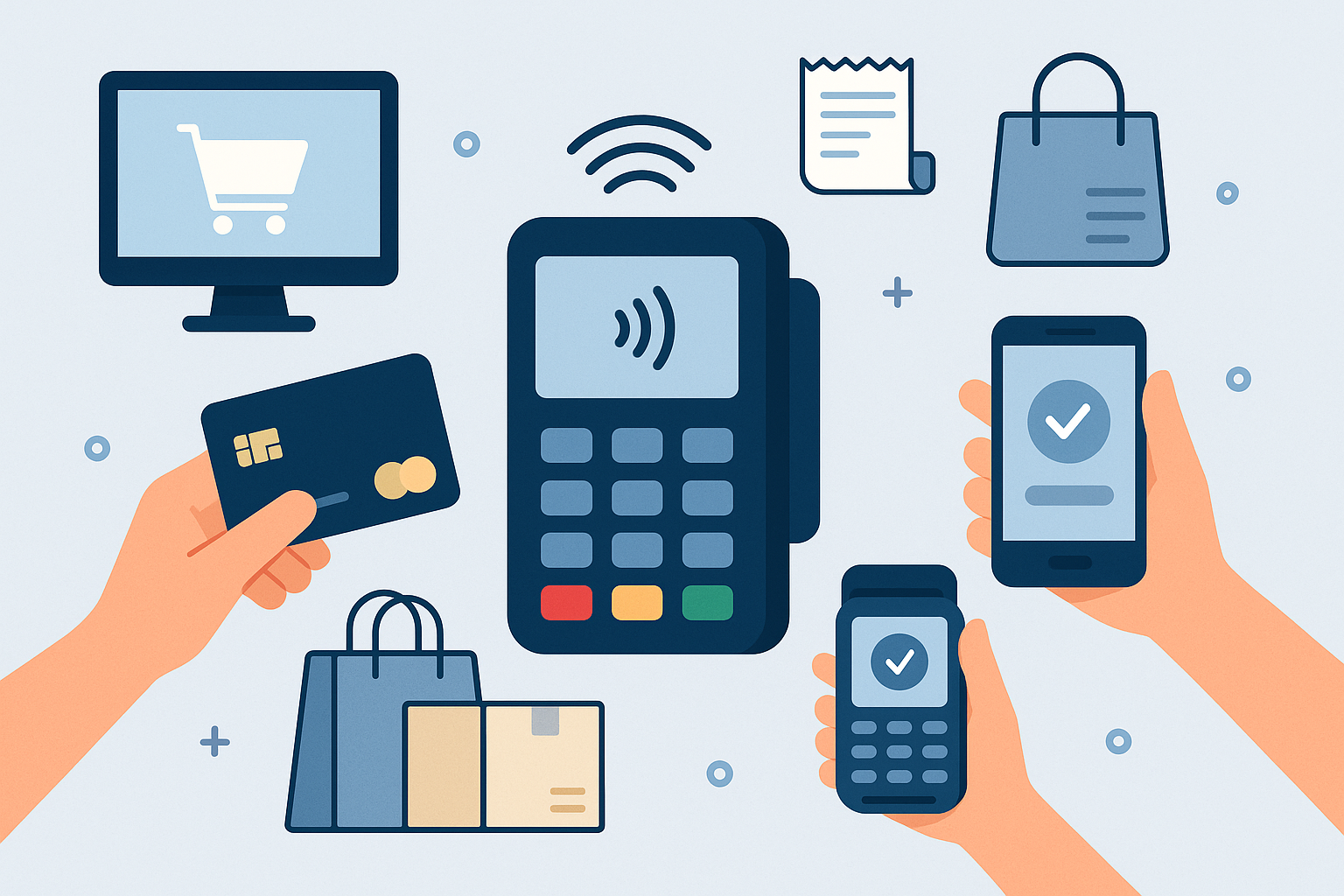
Omnichannel payments can span a wide variety of customer touchpoints. Some of the most common include:
- Ecommerce websites: Online storefronts where customers browse and pay from desktop or mobile devices.
- Mobile apps: Branded apps that allow fast checkout, saved payment methods, and loyalty integration.
- Physical stores: In-person point-of-sale systems that connect directly to the same payment ecosystem.
- Social commerce: Payments made through shopping features on social platforms.
- Marketplaces: Third-party selling environments that require centralized payment management.
- Subscriptions and recurring billing: Ongoing payments that need consistent customer records across channels.
When these channels work together, customers enjoy greater convenience and businesses gain a clearer picture of the full buying journey.
Challenges Businesses Face
Although omnichannel payments offer many advantages, implementing them can be complex. One common challenge is system integration. Many organizations rely on a mix of legacy POS software, ecommerce tools, and separate payment processors, which can make it difficult to create a unified experience.
Another challenge is maintaining consistency across channels. Pricing, promotions, refunds, and loyalty rewards all need to align, or customers may become frustrated. A poor in-store and online handoff can quickly undermine the benefits of an omnichannel strategy.
Security and compliance also require careful attention. Businesses must protect payment data, comply with PCI DSS standards, and stay ahead of evolving fraud threats. As payment options grow, so does the need for robust governance and monitoring.
Finally, organizations may need to train staff and adjust workflows to support a more connected payment environment. Success depends not only on technology but also on coordination between operations, finance, IT, and customer support teams.
Best Practices for Implementing Omnichannel Payments
Choose a Unified Payment Strategy
Start by mapping out all customer touchpoints and identifying where payments occur. Then choose a strategy that connects those channels through a single platform or tightly integrated set of tools. The more unified the architecture, the easier it will be to manage reporting, reconciliation, and customer data.
Offer Popular Payment Methods
Give customers a range of payment choices so they can pay in the way that feels most natural. Include major cards, digital wallets, and local payment options where relevant. The more payment flexibility you provide, the more likely customers are to complete their purchase.
Prioritize Security and Compliance
Use encryption, tokenization, fraud detection, and role-based access controls to protect payment data. Make sure your systems follow applicable compliance requirements and that security measures are consistent across every channel.
Invest in Integration
Omnichannel payments depend on communication between systems. Invest in APIs, middleware, or payment orchestration tools that allow your ecommerce, POS, CRM, and accounting systems to share accurate data in real time.
Monitor Performance and Customer Behavior
Track authorization rates, conversion rates, refund trends, and channel-specific performance. Use this data to identify friction points and improve the payment experience over time. A successful omnichannel strategy is continuously refined based on customer behavior.
The Future of Omnichannel Payments
As commerce continues to evolve, omnichannel payments will become even more important. Customers expect seamless shopping experiences across devices, platforms, and locations, and businesses that cannot meet those expectations risk falling behind.
Emerging technologies such as biometric authentication, real-time payments, tap-to-pay mobile solutions, and embedded finance will likely make payment experiences even faster and more flexible. At the same time, personalization will play a bigger role, with businesses tailoring payment offers, loyalty incentives, and checkout flows to individual preferences.
The future of payments is not just digital or physical. It is connected. Companies that build a strong omnichannel foundation now will be better prepared to adapt, innovate, and compete in a rapidly changing market.
Conclusion
Omnichannel payments help businesses deliver a smooth, consistent, and customer-friendly payment experience across every channel. By unifying systems, improving data visibility, and supporting flexible payment methods, they can boost sales, strengthen loyalty, and simplify operations. In a world where customers expect convenience at every step, omnichannel payments are quickly becoming a business essential.