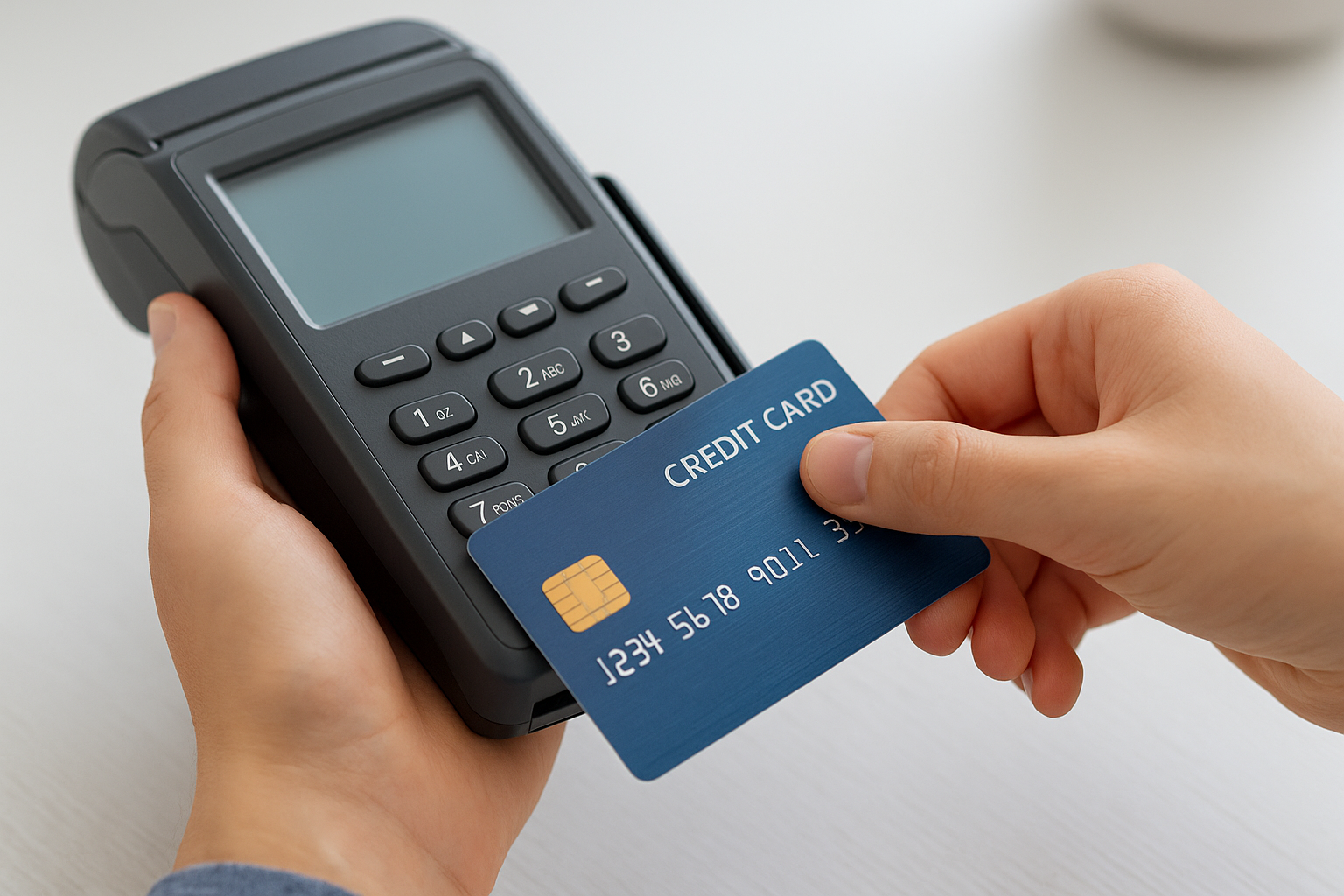
What Is EMV Credit Card Processing?
EMV credit card processing refers to the technology used when a payment card with an embedded chip is inserted into a card reader to complete a transaction. The letters EMV stand for Europay, Mastercard, and Visa, the companies that originally created the standard. Today, EMV has become the global benchmark for secure in-person card payments.
Unlike traditional magnetic stripe cards, which store static payment data that can be copied relatively easily, EMV cards generate unique transaction data each time they are used. This makes it much harder for criminals to clone cards or reuse stolen information. For merchants, this shift has helped reduce fraud and improve trust at the point of sale.
How EMV Credit Card Processing Works
At a high level, EMV processing adds an extra layer of security to card-present payments. Instead of simply swiping a card, the customer inserts the chip card into a terminal or taps it if contactless payment is supported. The terminal and chip communicate to verify the card and create a one-time transaction code.
Step 1: The card is inserted or tapped
When a customer presents an EMV card, the chip on the card begins communicating with the payment terminal. If the transaction is contactless, the same chip-based security principles apply through NFC technology.
Step 2: The card and terminal exchange encrypted data
The chip sends transaction-specific data to the reader. This data changes every time the card is used, which is a major reason EMV is more secure than magnetic stripe processing.
Step 3: The payment is authorized
The payment processor sends the transaction to the card network and issuing bank for approval. During this process, the bank checks whether the card is valid, the account has available funds or credit, and the transaction appears legitimate.
Step 4: The transaction is completed
If approved, the payment is finalized and the merchant receives confirmation. For the customer, the experience is simple. For the merchant, however, the EMV process significantly reduces the risk of accepting counterfeit card data.
Why EMV Matters for Businesses
EMV technology matters because card fraud remains a real challenge for businesses of every size. When a business accepts chip cards properly, it can lower its exposure to counterfeit fraud and may shift certain fraud liability away from itself, depending on the transaction and setup.
Beyond security, EMV also supports customer confidence. Shoppers are more likely to trust a business that accepts modern payment methods securely and efficiently. In many industries, chip-enabled terminals are now expected rather than optional.
Reduced fraud risk
One of the biggest benefits of EMV is the reduction of counterfeit card fraud. Because each chip transaction creates unique data, stolen information is much less useful to fraudsters than data taken from a magnetic stripe.
Liability protection
In many cases, the party using the less secure technology may bear more responsibility if a fraudulent transaction occurs. That means businesses that fail to support EMV transactions may be more vulnerable to chargebacks and fraud-related losses.
Improved customer trust
Modern payment options signal that a business takes security seriously. Customers notice when a merchant accepts chip cards, contactless payments, and updated terminal technology.
EMV vs. Magnetic Stripe Cards
Before EMV became widespread, most card payments relied on magnetic stripes. These stripes contain static account data that can be read and copied by a skimming device. Once copied, the data can often be used to create counterfeit cards or conduct fraudulent transactions.
EMV cards solve this problem by using an embedded microprocessor that creates dynamic authentication data. Instead of transmitting the same information every time, the chip helps generate a unique code for each purchase. This makes EMV cards far more resistant to duplication.
That said, EMV is not a complete fraud solution. It is highly effective for in-person card-present transactions, but businesses still need layered security for online sales, manual entry transactions, and account management.
Types of EMV Payments
EMV technology supports several different payment experiences, all designed to make transactions more secure and convenient.
Chip insert transactions
This is the classic EMV experience. The customer inserts the card into the terminal and waits for the transaction to complete. The card remains in the reader for the duration of the authorization process.
Contactless tap payments
Many EMV cards also support tap-to-pay functionality through near-field communication, or NFC. Customers simply tap their card, phone, or wearable device to complete the purchase. These payments are quick, secure, and increasingly popular.
Mobile wallet payments
Apple Pay, Google Pay, and similar wallets often use tokenization along with EMV-style authentication methods. Although the card itself may not be physically present, the transaction can still follow the security standards that help reduce fraud.
EMV Compliance and Merchant Responsibilities
For merchants, EMV compliance is more than just installing a new card reader. It means using hardware and software that support chip-card transactions correctly and training staff to process payments properly. A terminal that still defaults to swipe when a chip is available may leave the business exposed to unnecessary liability.
Merchants should also ensure their payment systems are updated regularly and compatible with current card network requirements. Working with a reputable payment processor and staying informed about terminal updates can help keep operations secure and efficient.
Another important responsibility is staff education. Employees should know when to insert a chip card, how to handle tap payments, and what to do if a transaction fails. Clear procedures reduce mistakes and improve the checkout experience.
Common Challenges with EMV Processing
While EMV offers major security benefits, businesses may encounter some practical challenges during adoption and daily use.
Slower checkout for some customers
Chip insert transactions can take a few extra seconds compared to swiping a card. While this delay is usually minor, busy retailers may notice the difference during peak hours.
Hardware upgrades
Older terminals may not support EMV chip cards or contactless payments. Businesses often need to invest in new equipment, which can be a cost consideration.
Ongoing training and maintenance
Merchants must keep up with changing technology, card network rules, and staff training. Without proper maintenance, even EMV-capable systems can create friction at checkout.
Best Practices for EMV Credit Card Processing
To get the most out of EMV processing, merchants should take a proactive approach to payment security and system performance.
- Use EMV-certified payment terminals and software.
- Enable contactless payment options when possible.
- Train staff to prefer chip or tap over swipe when available.
- Keep payment systems updated with the latest firmware and security patches.
- Review processor support, fees, and compatibility before upgrading equipment.
- Combine EMV with other fraud tools, such as tokenization and address verification, for broader protection.
These steps help create a smoother customer experience while reducing the chances of costly fraud incidents.
Conclusion
EMV credit card processing has become a standard part of secure in-person payments. By using chip technology instead of static magnetic stripe data, businesses can reduce fraud risk, improve customer trust, and support modern checkout experiences. While adopting EMV may require updated equipment and staff training, the long-term benefits make it an essential part of any payment strategy.