What Are Interchange Fees?
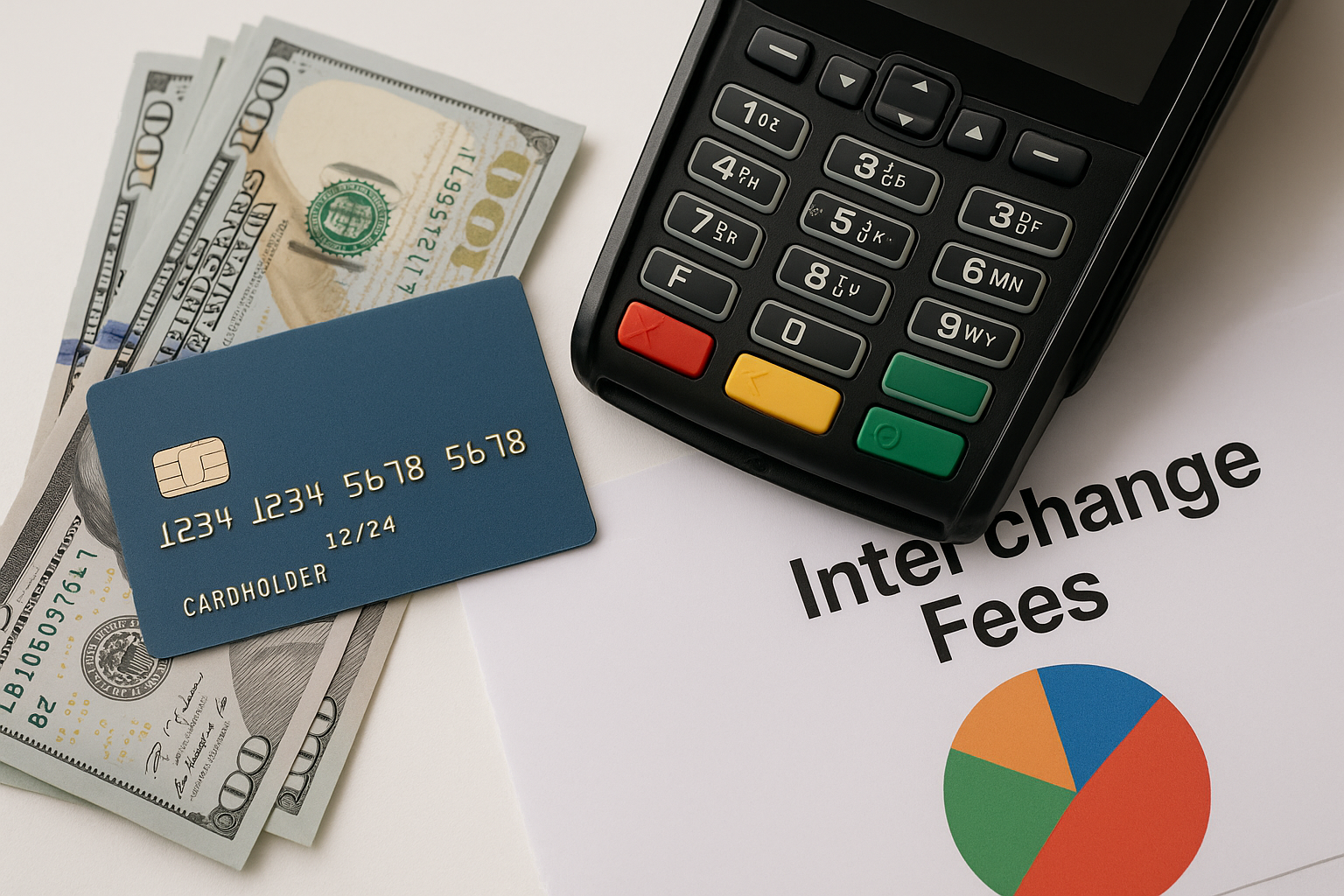
Interchange fees are charges paid by a merchant’s bank to the cardholder’s bank each time a customer uses a debit or credit card. In simple terms, they are part of the cost of accepting card payments. Although customers rarely see them, interchange fees play a major role in the payment ecosystem and influence how businesses, banks, and card networks handle transactions.
These fees are not the same as the full processing fee a business pays. Instead, interchange is one component of the total cost of accepting cards. The merchant’s payment processor and the card network may also add their own fees, but interchange is usually the largest portion.
How Interchange Fees Work
When a customer pays with a card, the transaction moves through several parties: the merchant, the payment processor, the card network, the acquiring bank, and the issuing bank. The issuing bank is the institution that gave the customer the card. The acquiring bank is the merchant’s bank or payment provider.
Here is the basic flow:
- The customer makes a purchase using a credit or debit card.
- The payment request is sent through the card network for authorization.
- The issuing bank approves the transaction and later receives the interchange fee.
- The merchant receives the payment minus processing costs.
The interchange fee is paid to the issuing bank because it takes on risk and handles the customer account. This fee helps cover fraud protection, card rewards, customer service, and the cost of funding the transaction until settlement.
What Determines the Size of Interchange Fees?
Interchange fees are not one-size-fits-all. They vary based on a number of factors, including the type of card used, the card network, the merchant category, and how the payment is processed.
Card Type
Rewards cards, premium cards, business cards, and commercial cards often have higher interchange fees than basic debit cards. These cards usually provide more benefits to consumers, which increases the issuing bank’s cost.
Transaction Method
Card-present transactions, such as in-store chip or tap payments, are usually cheaper than card-not-present transactions like online or phone orders. That is because card-not-present payments carry more fraud risk.
Merchant Category
Different industries may have different rates. For example, supermarkets, utilities, travel, and restaurants can each fall into different fee categories depending on the card network and transaction profile.
Transaction Size and Volume
Some interchange structures include a percentage of the sale plus a fixed amount. This means smaller transactions can be affected differently than larger ones. Merchants with high transaction volume may also negotiate better overall processing rates, even though interchange itself is often non-negotiable.
Why Interchange Fees Exist
Interchange fees help support the card payment system. Without them, banks would have less incentive to issue cards, offer fraud protection, provide rewards, or take on the operational costs of maintaining cardholder accounts.
These fees also help card networks maintain a reliable and secure payment environment. They support the infrastructure that allows consumers to pay quickly and merchants to receive funds efficiently. In exchange, merchants gain access to a payment method that is convenient, widely accepted, and often leads to higher sales.
How Interchange Fees Affect Businesses
For businesses, interchange fees are an important operating expense. They can reduce profit margins, especially for companies with low-ticket items or high card transaction volume. A business may not notice a huge impact on a single sale, but over time, these fees can add up significantly.
Businesses in industries with thin margins often pay close attention to card acceptance costs. Restaurants, grocery stores, gas stations, and ecommerce businesses are especially sensitive because cards are used frequently and transaction sizes may be relatively small.
Interchange fees can also influence business decisions in other ways. Some merchants may encourage debit card use, set minimum purchase amounts where allowed, or look for payment processing solutions that offer more transparency and lower overall costs.
How Consumers Are Affected
Although interchange fees are charged to merchants, consumers may still feel their effects indirectly. Businesses often build payment processing costs into the prices of goods and services. As a result, some of the cost of interchange may be reflected in what customers pay.
At the same time, consumers benefit from the convenience, security, and rewards that card payments offer. Interchange fees help fund these perks, which is one reason many credit cards offer cashback, travel points, and purchase protections.
In other words, interchange fees are part of the tradeoff between convenience and cost. They make card payments possible and valuable, but they can also contribute to higher merchant expenses.
Interchange Fees vs. Processing Fees
It is easy to confuse interchange fees with payment processing fees, but they are not the same thing. Interchange fees go to the issuing bank, while processing fees go to the payment processor or merchant service provider.
A merchant’s total card payment cost usually includes:
- Interchange fee — paid to the customer’s issuing bank
- Assessment fee — charged by the card network
- Processor markup — charged by the payment processor
When comparing payment providers, merchants should look at the full pricing model, not just the processor’s advertised rate. A low processor markup may still result in high total costs if interchange and network fees are significant.
Are Interchange Fees Regulated?
In many countries, interchange fees are regulated or capped in some form. These rules are often intended to reduce merchant costs and increase competition in the payment industry. In other regions, interchange rates are set by card networks and may vary more widely.
Regulation can affect debit card fees, credit card fees, cross-border transactions, and certain commercial cards. However, even where regulation exists, interchange fees still remain a major part of the payment landscape.
Because fee structures differ by country and card type, merchants operating internationally should understand the local rules and the fee schedules that apply to their transactions.
How Businesses Can Manage Interchange Costs
While merchants usually cannot eliminate interchange fees, they can take steps to manage them more effectively.
Encourage Lower-Cost Payment Methods
Debit cards and card-present transactions often cost less than premium credit cards or online card-not-present transactions. Businesses that can safely steer customers toward lower-cost methods may reduce fees over time.
Use Fraud-Reducing Technology
Tools such as EMV chip readers, tokenization, address verification, and 3D Secure can help lower fraud risk. In some cases, better security may support more favorable interchange qualification.
Review Processing Statements Regularly
Merchants should examine monthly statements to understand where costs are coming from. This can reveal hidden markups, expensive transaction types, or opportunities to switch pricing plans.
Choose the Right Payment Processor
Not all processors price the same way. Some offer interchange-plus pricing, which separates interchange from the processor’s markup and makes costs easier to understand. This model is often preferred by merchants who want transparency.
Reduce Avoidable Risk
Accurate billing information, clear refund policies, and good customer service can help reduce disputes and chargebacks. Since riskier transactions may cost more, keeping chargebacks low can support overall payment efficiency.
The Bottom Line on Interchange Fees
Interchange fees are a core part of the card payment system. They help fund the infrastructure that makes card transactions fast, secure, and widely accepted. For businesses, they represent a real cost that can affect margins and pricing. For consumers, they help support convenience and rewards, though the costs may be built into prices.
Understanding how interchange fees work gives merchants a better foundation for choosing payment processors, managing expenses, and making informed decisions about how to accept payments.
Conclusion
Interchange fees may be behind the scenes, but they have a major impact on the way payments work. By understanding what they are and how they influence both businesses and customers, merchants can make smarter choices and better manage payment costs.